OUR STORY

SINCE

1991

Rooted in Ojai. Growing resilience.

C.R.E.W., Concerned Resource and Environmental Workers, is the Ojai Valley's conservation corps.

Since 1991, its paid crews of young people have rebuilt trails in the Los Padres National Forest and cut fuel breaks above the valley.

It also features Once Upon a Watershed, for students from transitional kindergarten through 7th grade, and the Green Valley Project, for ages 13 to 20.

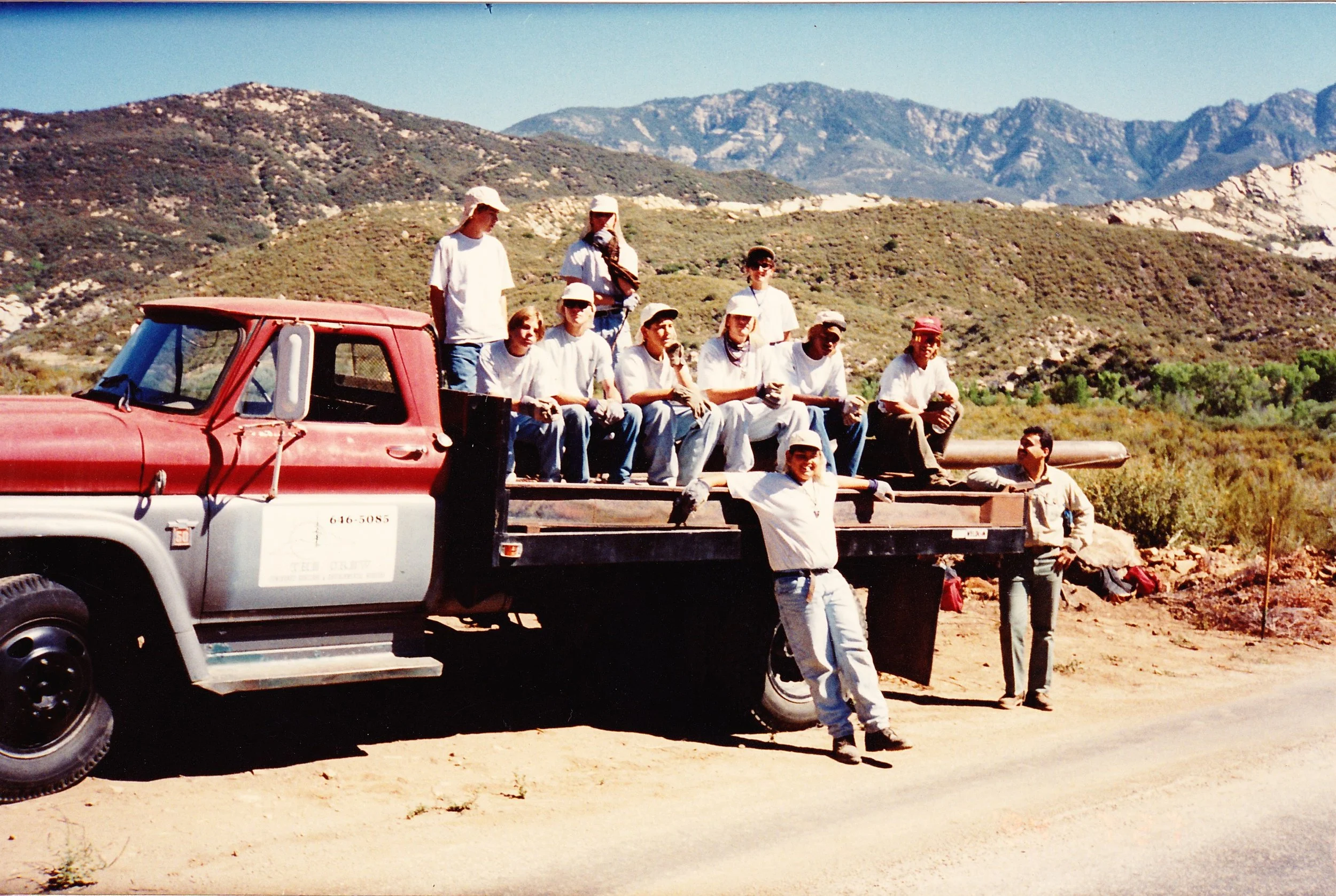
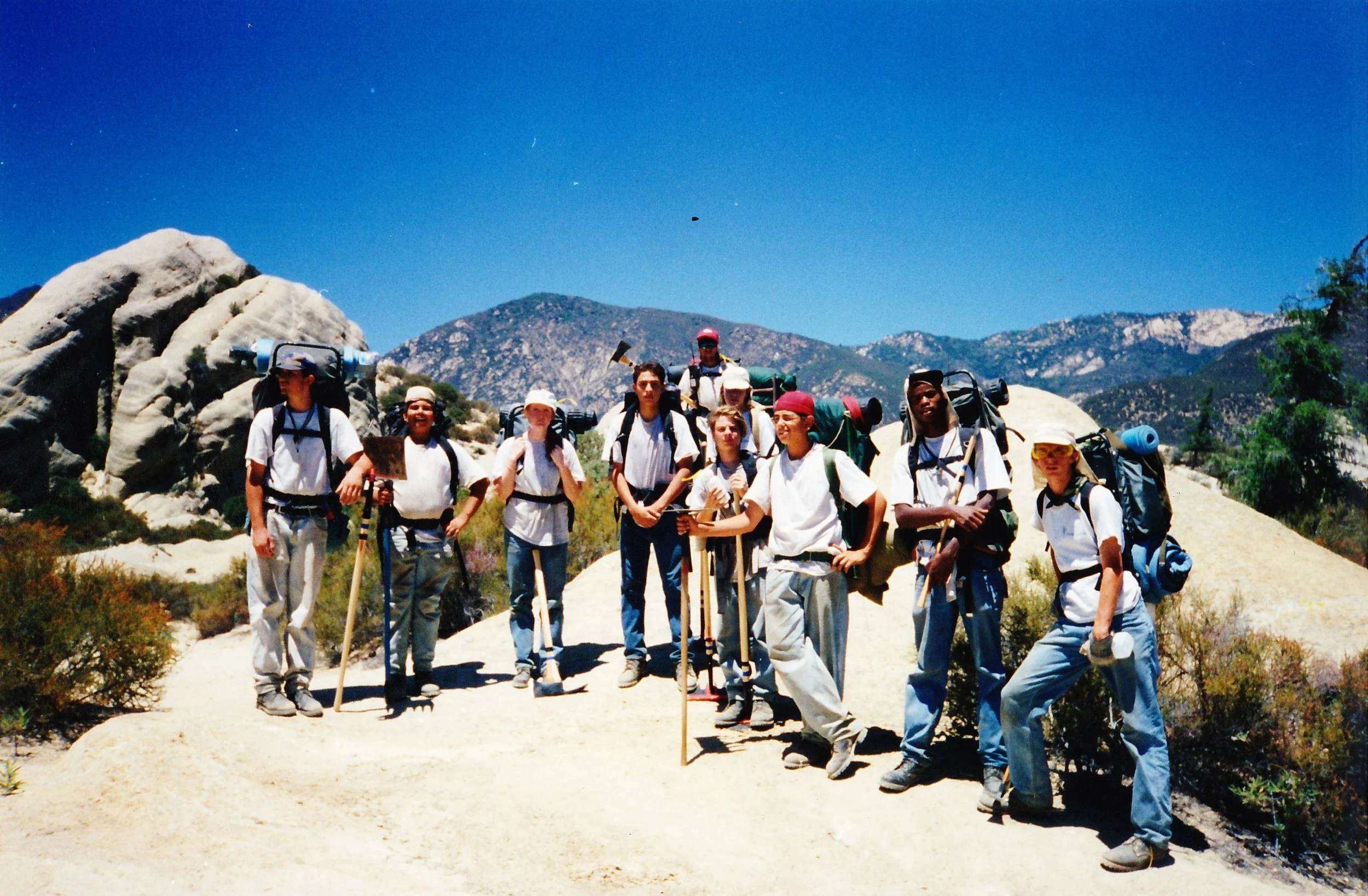
A C.R.E.W. crew in the backcountry, 1993 or 1994

01 Our purpose

02 Our beginnings

03 How we grew

04 C.R.E.W. today

05 Our approach

01 OUR PURPOSE
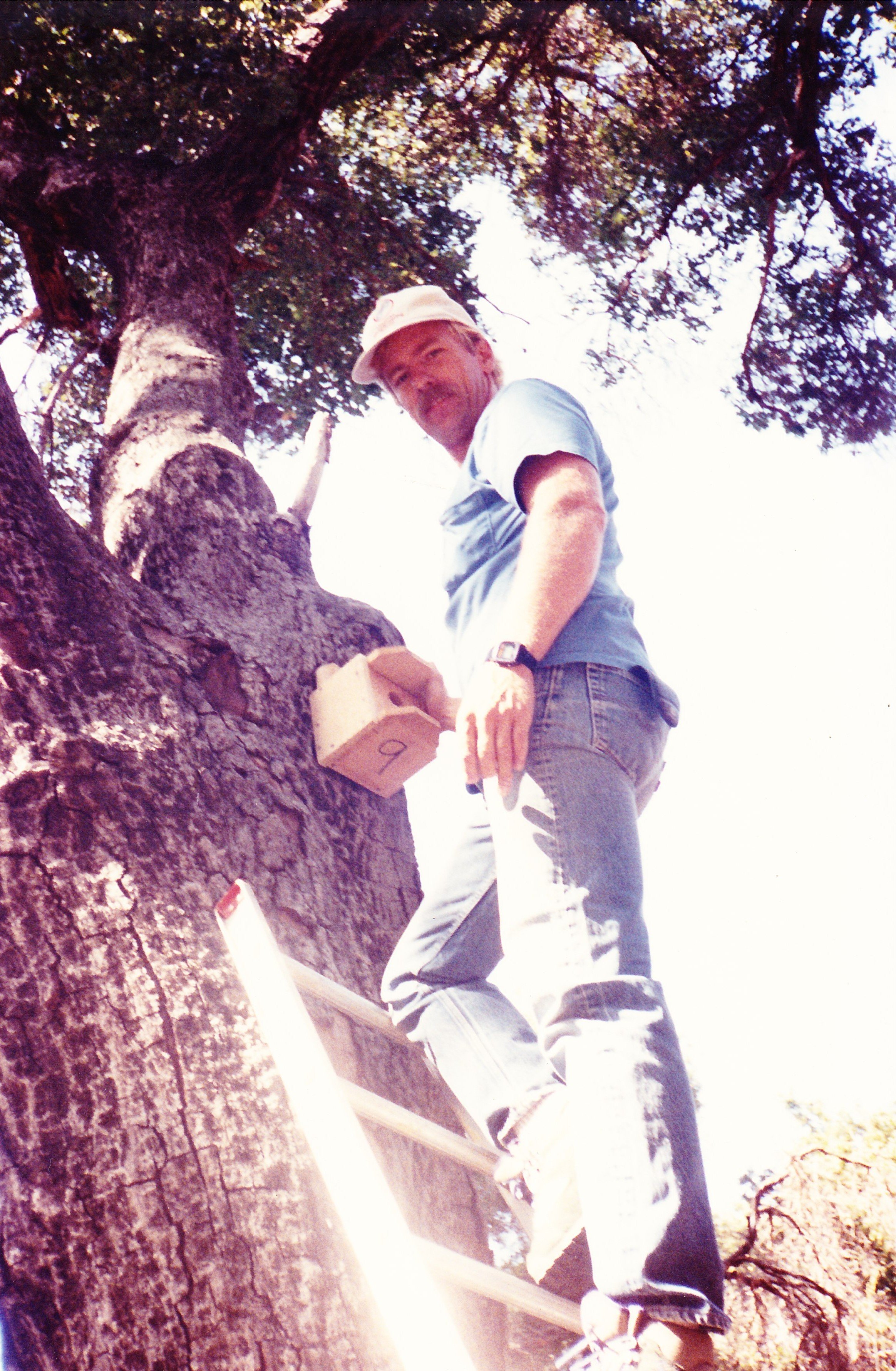
Founder Paul Starbard

The forest needed help. The Ojai Valley region’s young people dug in to help.

Concerned Resource and Environmental Workers wasn’t born a fully formed nonprofit agency. Our founder Paul Starbard made this simple observation and took action:

“I saw that the forest needed help, and the kids needed help, so I thought ‘Ah ha! Let’s put the two together.’”
Paul Starbard, founder

In 1991, C.R.E.W. got its start teaching teens how to work on backcountry trails, and the answer came back loud and clear: yes, this works.

02 OUR BEGINNINGS

By 1996, the crews were restoring about 28 miles of wilderness trail.

Paul Starbard left his contracting business to start it, and the first form of the C.R.E.W. Field Corps worked in the Los Padres National Forest. In 1993, the U.S. Forest Service let them use a facility in Rose Valley in exchange for trail and campground work.

In 1996, crew members 14 to 21 years old were restoring about 28 miles of wilderness trail, including the Red Reef Trail near Horse Thief Camp. One day that summer, the ground temperature reached 126 degrees.


For some of them, it was their first time in the wilderness.
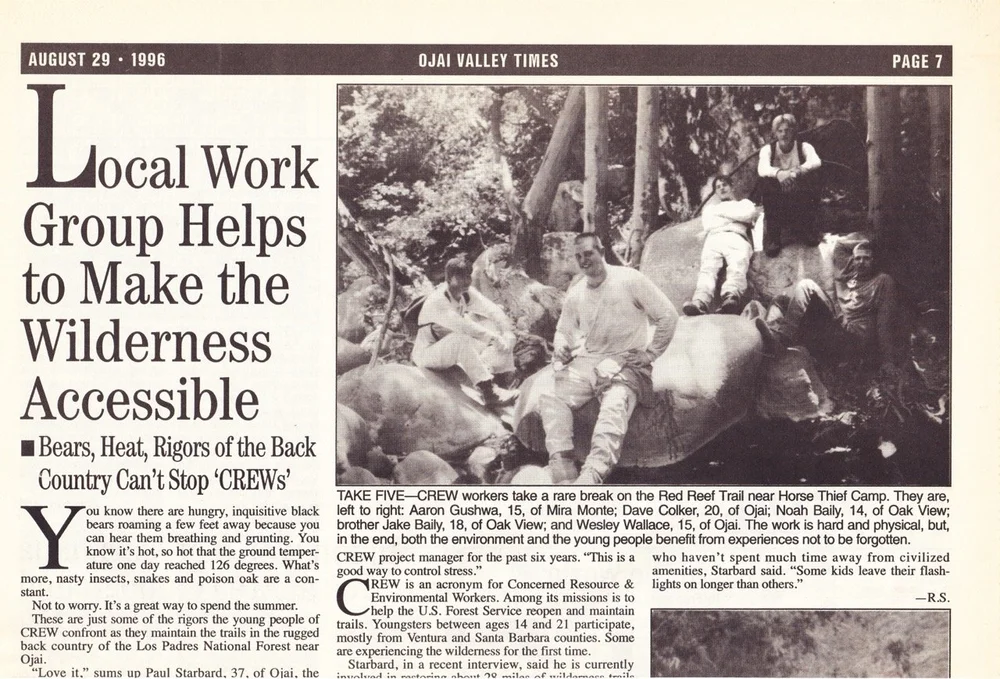

Red Reef Trail, near Horse Thief Camp
1996
The Ojai Valley Times photographed five crew members, ages 14 to 20, taking a break on this Sespe Wilderness trail. C.R.E.W.’s 1997 flyer offered a spring break volunteer trip on it: nearly eight miles down the trail from behind the Topa Topa Bluffs, three days of trail work, and camp at Horse Thief Camp.
Ojai Valley Times clipping, August 29, 1996: five C.R.E.W. crew members taking a break on the Red Reef Trail near Horse Thief Camp
Ojai Valley Times,
Local Work Group Helps to Make the Wilderness Accessible
Read the article

03 HOW WE GREW

C.R.E.W. crews worked 3,500 hours in 1991 and work more than 11,000 a year now.
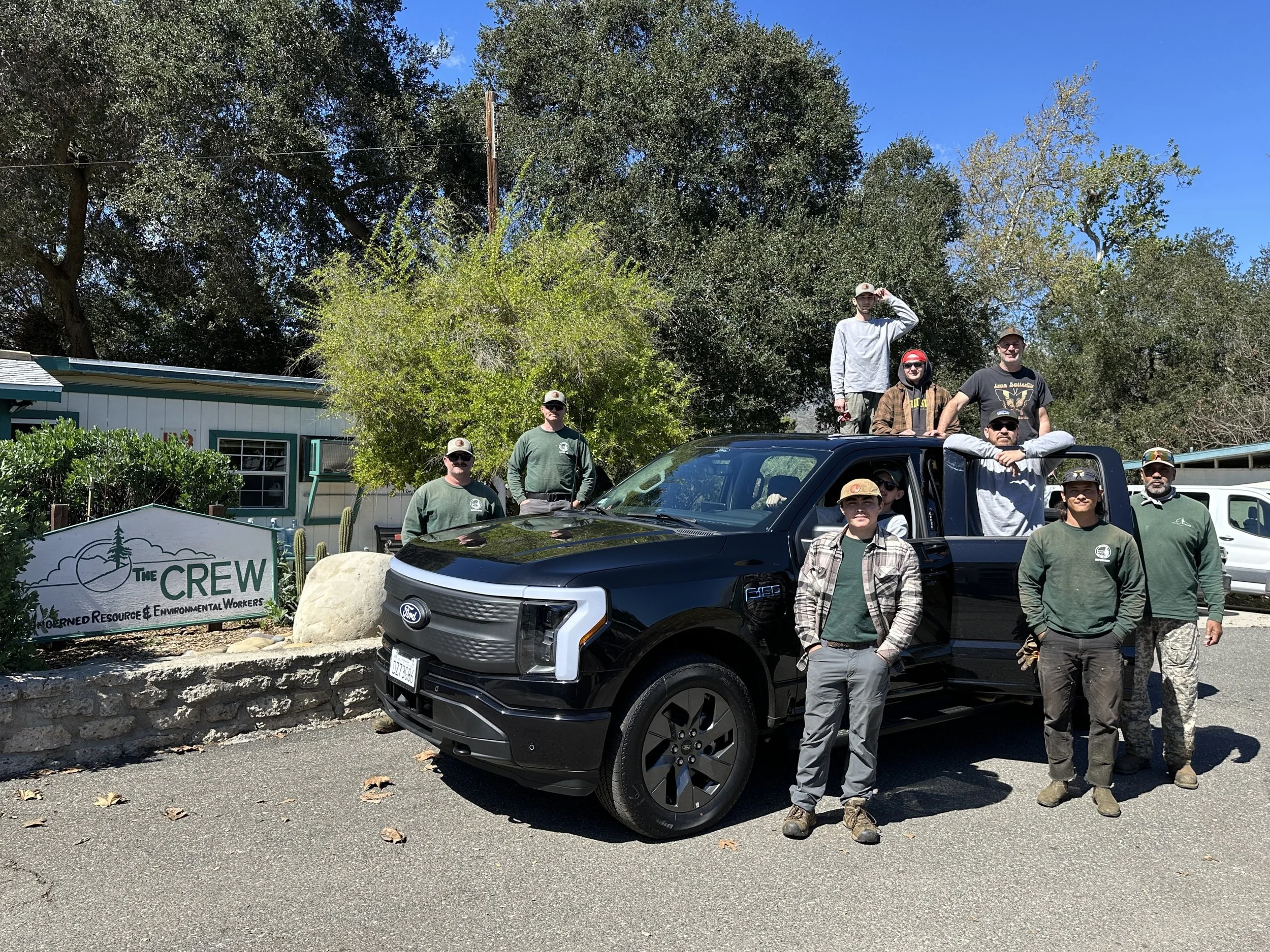
A group of people posing outdoors in front of trees and a building, with several standing and some sitting on a black pickup truck, in a sunny environment.
A group of people sitting on the back of a red and white pickup truck in a mountainous landscape with clear blue skies.

By 2001, about 100 young people a year worked on C.R.E.W. crews. The Los Angeles Times reported that the budget had grown from $92,000 in 1991 to more than $400,000, and the work hours from 3,500 a year to 10,000.

Each row below is a place the crews worked, in the order they got there, with the newspaper or photograph from that year.
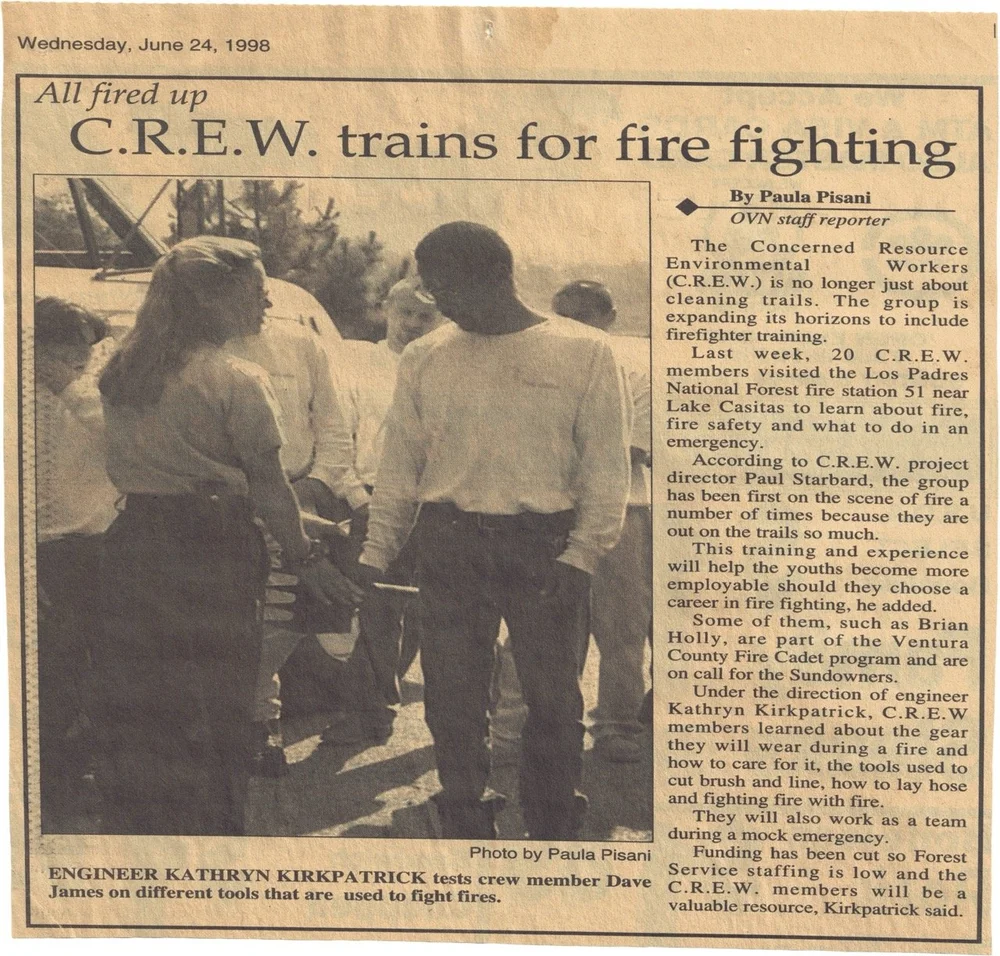
Los Padres National Forest fire station 51, near Lake Casitas
1998
20 C.R.E.W. members came here to learn about fire, fire safety, and what to do in an emergency. Paul Starbard, the project director, told the paper the crews had been first on the scene of a fire a number of times because they were out on the trails so much.
Ojai Valley News clipping, June 24, 1998: C.R.E.W. members in firefighter training at Los Padres National Forest fire station 51
Ojai Valley News,
All fired up: C.R.E.W. trains for fire fighting
Read the article
The C.R.E.W. Trail, Foster Park
2000
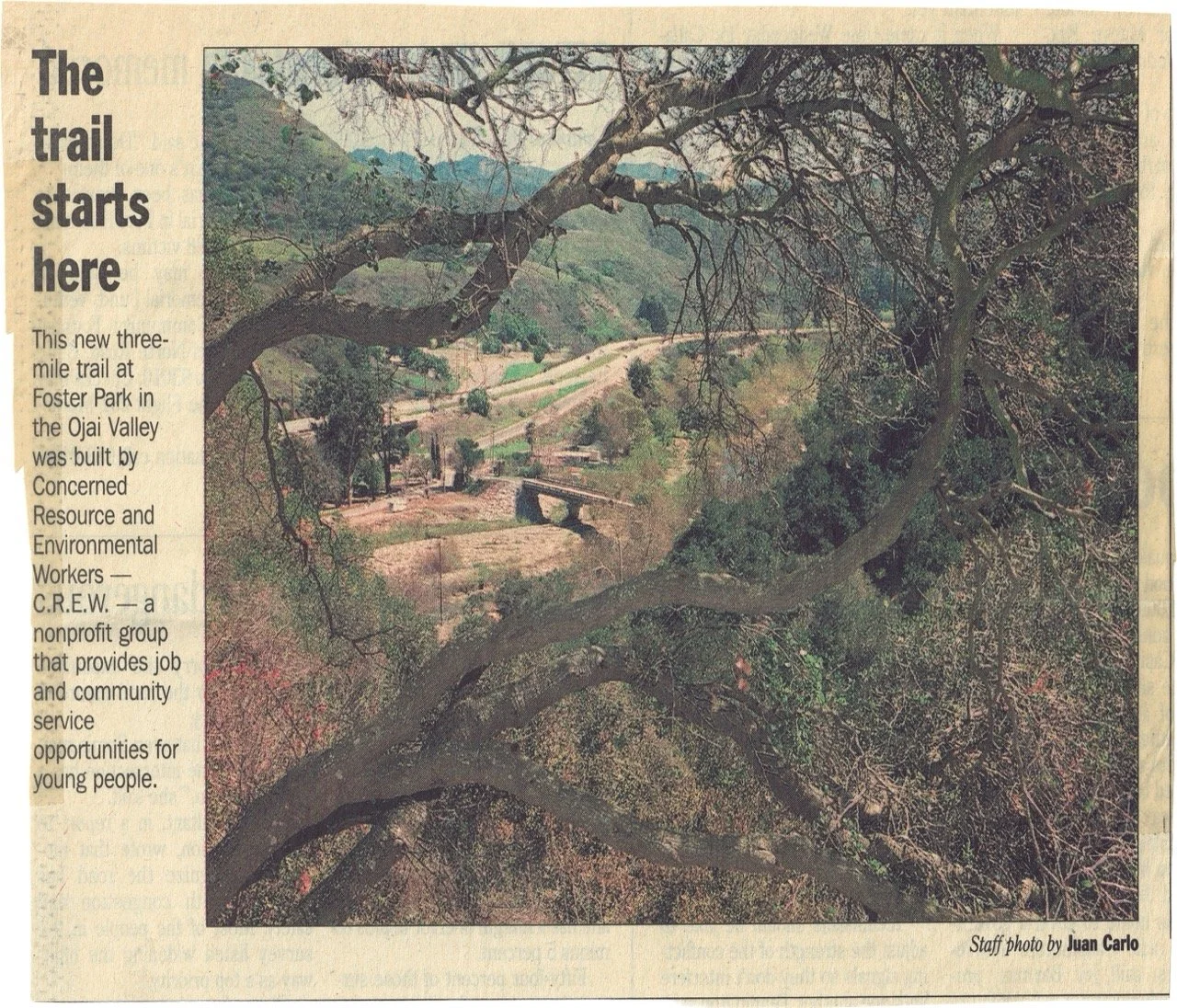
18 crew members spent three months building a three-mile loop here, on the route of a trail the Civilian Conservation Corps built in the 1930s. 100 people came to its dedication as the C.R.E.W. Trail on March 1, 2000.
Ventura County Star clipping, March 1, 2000: a photo of the new C.R.E.W. Trail at Foster Park
Ventura County Star,
The trail starts here
Read the article
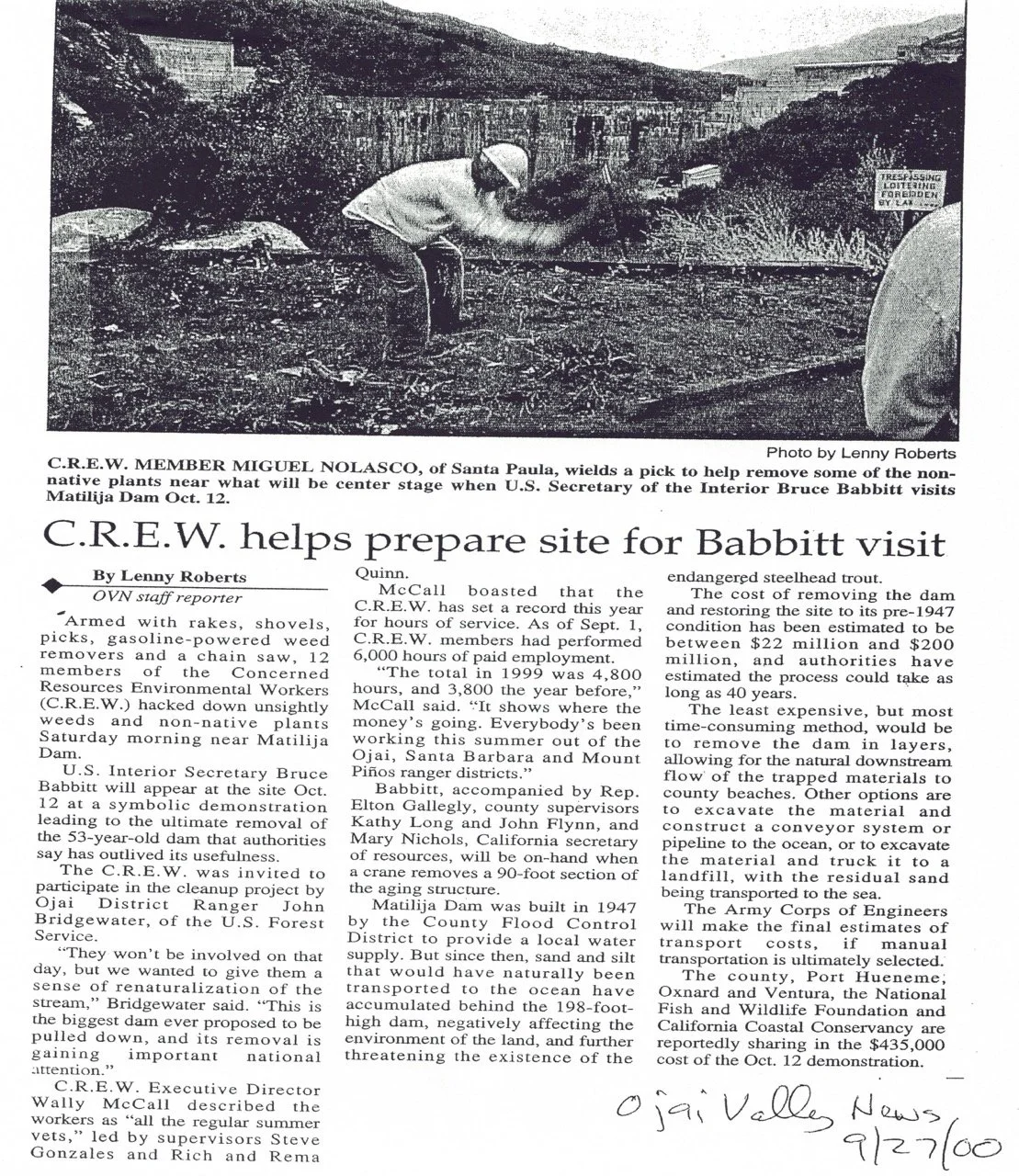
Matilija Dam
2000
12 crew members with rakes, shovels, picks, and a chain saw cleared weeds and non-native plants near the dam for U.S. Interior Secretary Bruce Babbitt’s October 12 visit, a demonstration of the plan to take the dam down.
Ojai Valley News clipping, September 27, 2000: a C.R.E.W. member clearing non-native plants near Matilija Dam
Ojai Valley News,
C.R.E.W. helps prepare site for Babbitt visit
Read the article
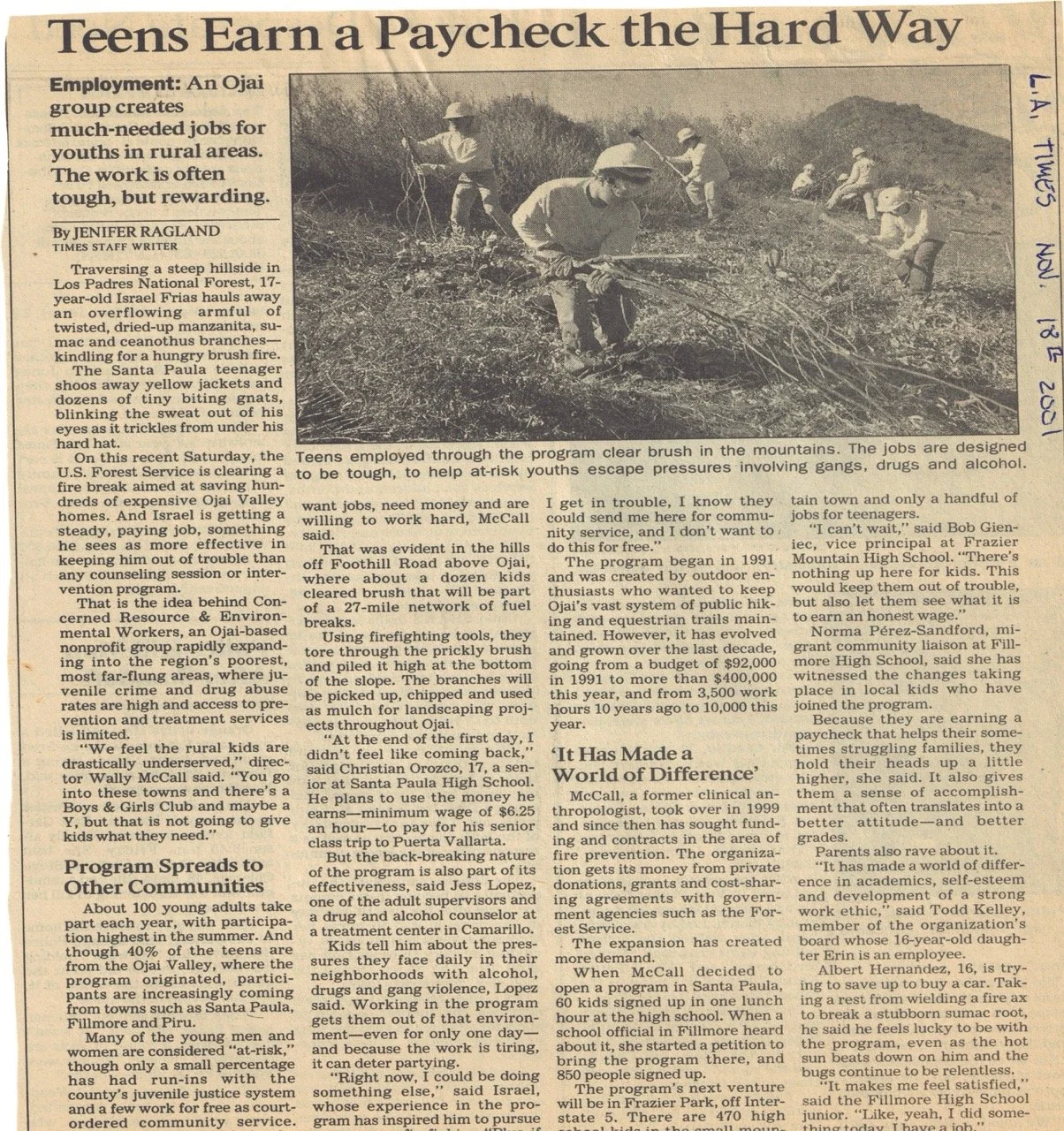
The hills off Foothill Road, above Ojai
2001
About a dozen crew members cut manzanita, sumac, and ceanothus off these hills with firefighting tools, for a 27-mile network of U.S. Forest Service fuel breaks meant to protect Ojai Valley homes. They piled the brush at the bottom of the slope to be chipped into mulch for landscaping around Ojai.
Los Angeles Times clipping, November 18, 2001: C.R.E.W. crew members clearing brush on a hillside
Los Angeles Times,
Teens Earn a Paycheck the Hard Way
Read the article
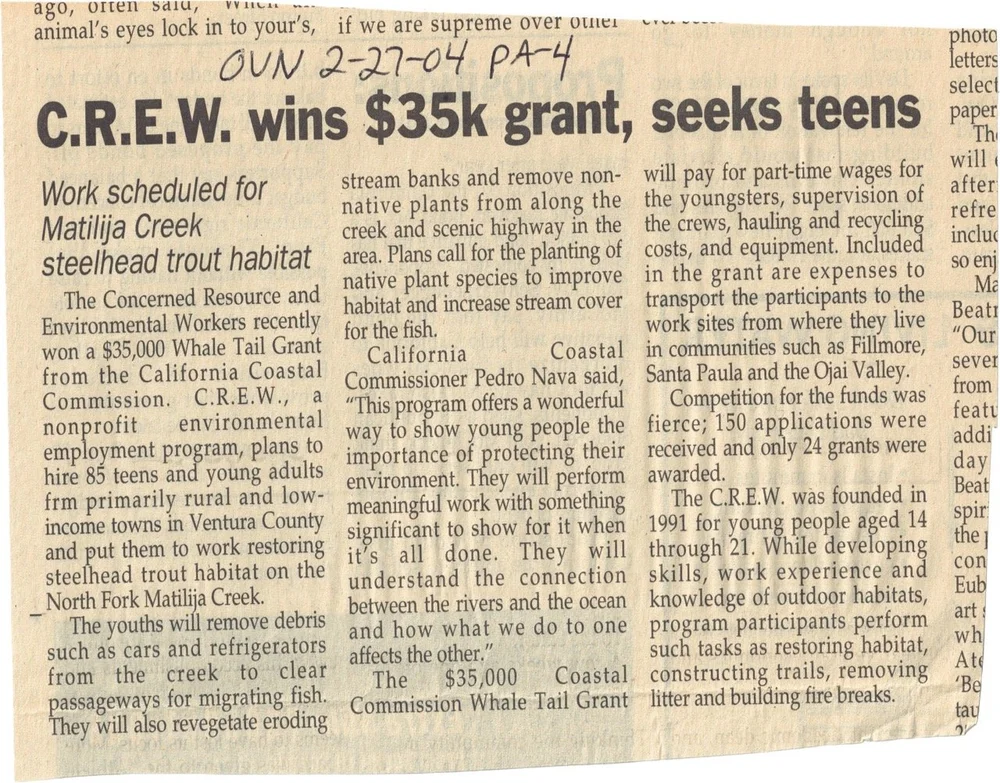
North Fork Matilija Creek
2004
C.R.E.W. won a $35,000 Whale Tail grant from the California Coastal Commission to hire 85 teens and young adults to restore steelhead trout habitat on the creek. The plan called for pulling debris as big as cars and refrigerators out of the creek so migrating fish could pass.
Ojai Valley News clipping, February 27, 2004, on the Whale Tail grant for North Fork Matilija Creek
Ojai Valley News,
C.R.E.W. wins $35k grant, seeks teens
Read the article
Stewart Canyon Creek
2014
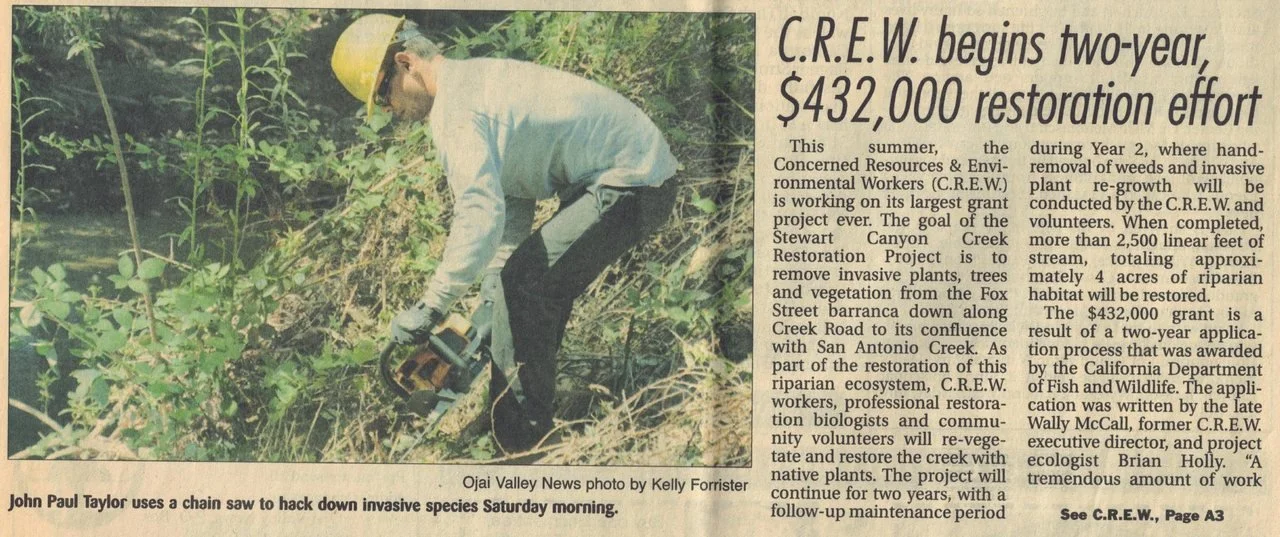
C.R.E.W. began its largest grant project yet, $432,000 from the California Department of Fish and Wildlife to restore the creek from the Fox Street barranca to San Antonio Creek, with paid work for an estimated 50 local youths. In the first two weeks, crews pulled more than four tons of blackberry and giant reed out of the creek.
Ojai Valley News clipping, July 23, 2014: a C.R.E.W. worker cutting invasive plants with a chain saw in Stewart Canyon Creek
Ojai Valley News,
C.R.E.W. begins two-year, $432,000 restoration effort
Read the article
Los Padres trails burned in the Thomas Fire
Since 2018
The Thomas Fire burned 281,893 acres across Ventura and Santa Barbara counties in December 2017. Since 2018, Field Corps crews have done recovery work on the burn areas and taken on fuel reduction and defensible space around homes.
Two C.R.E.W. crew members walking across a burned slope, 2018
A C.R.E.W. crew on a burned slope, 2018.
Classrooms
Once Upon a Watershed began in 2005 as Once Upon a Wetland, Sara Brooke Benjamin’s program for three Ojai Valley schools, and later became a C.R.E.W. program. In 2020, C.R.E.W. started the Green Valley Project, where Youth Council members spend a season on a project with program staff, usually alongside a partner organization.

04 C.R.E.W. TODAY

Today C.R.E.W. runs three programs from its headquarters on Baldwin Road in the Ojai Valley.
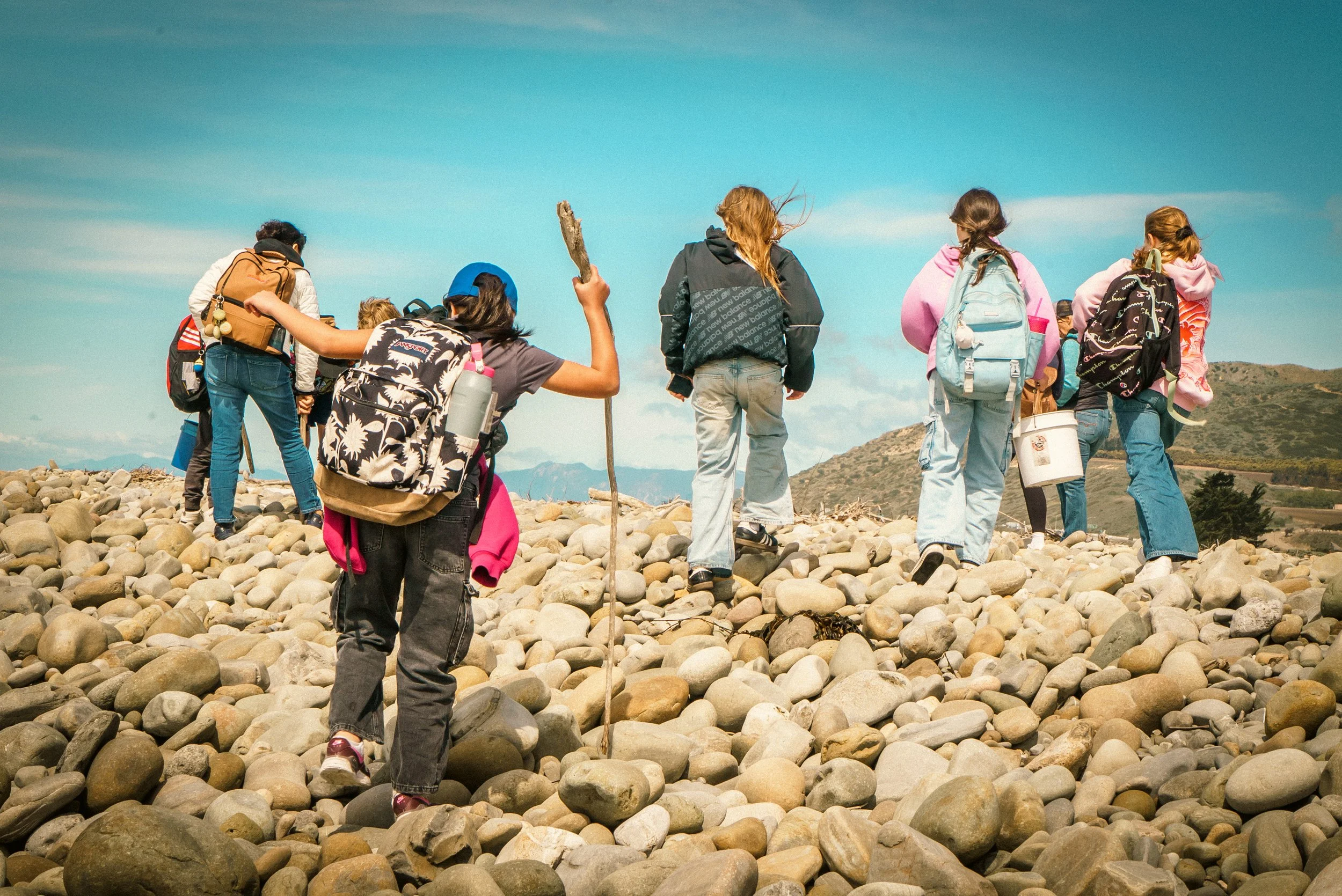

Group of children walking on a rocky beach, carrying backpacks and sticks, with mountainous terrain and blue sky in the background.

TRANSITIONAL KINDERGARTEN TO 7TH GRADE

Lessons in the Ventura River and Santa Clara River watersheds, in class and out at the field sites. Each grade studies a different part of the watershed, from pollinators in 2nd grade to steelhead trout in 6th.

AGES 13 TO 20

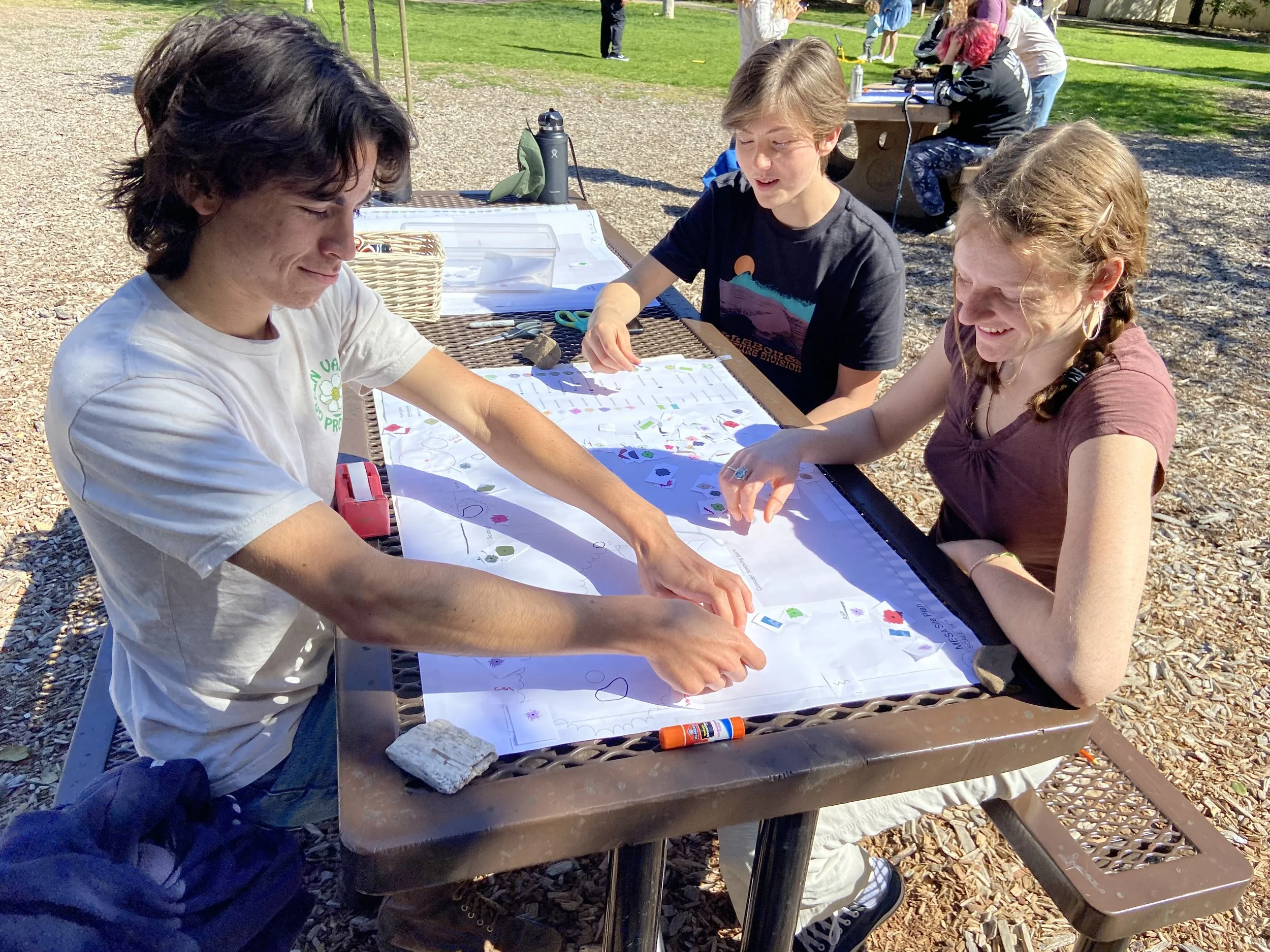
Youth Councils in Ojai, Ventura, Oxnard, and Thousand Oaks that meet weekly. Each council works in its own community, from snowy plover habitat at Ormond Beach to camera traps in the Conejo Valley.

AGES 14 TO 25

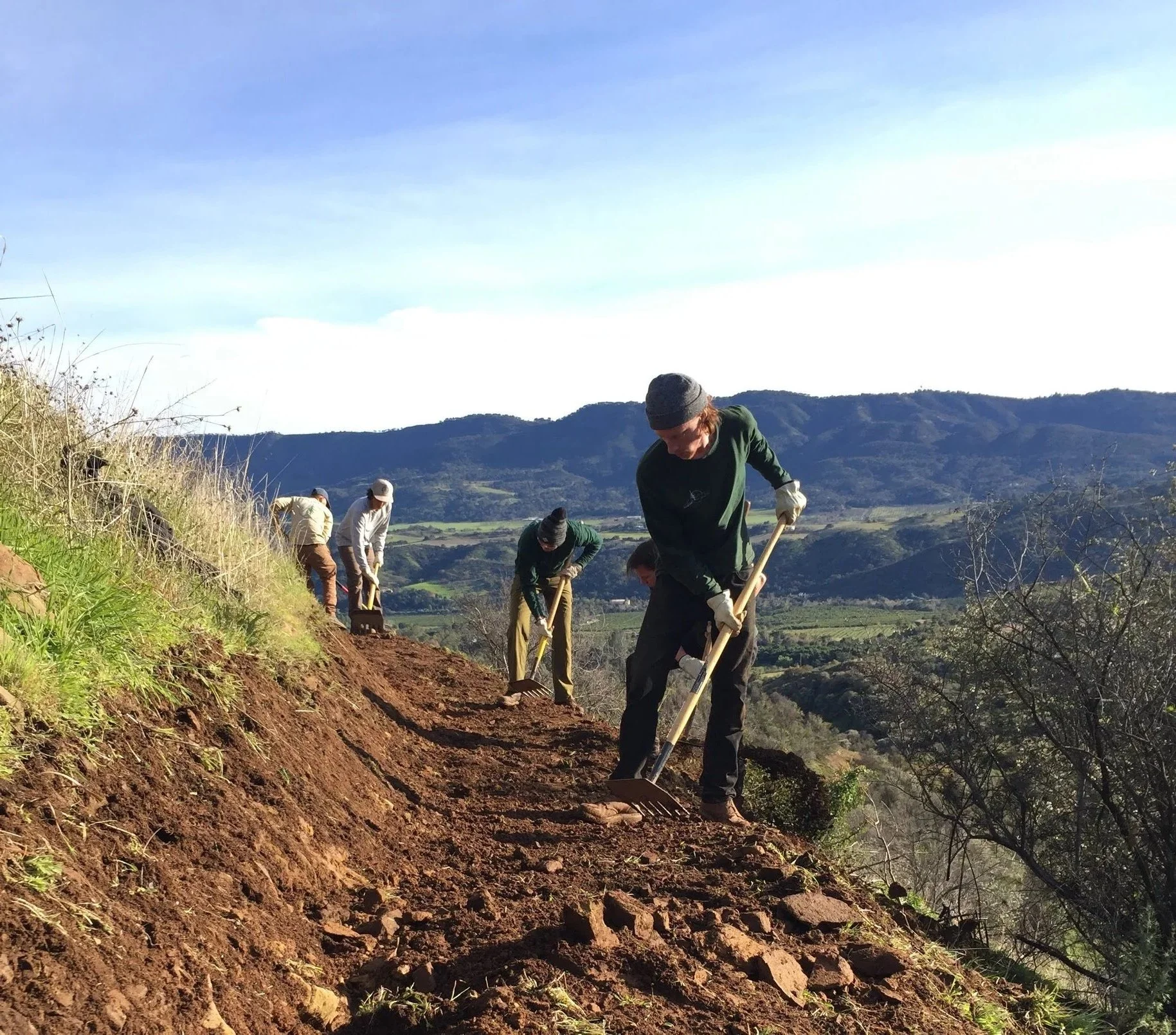
Paid crews that cut fuel breaks above the valley, clear defensible space around homes, and rebuild backcountry trails. A supervisor who knows the ground goes out with each crew.


This is the HQ office in Building E2 on Baldwin Road. It hires and pays the Field Corps, writes the grants, schedules the brush clearing and chipping, and answers (805) 649-8847. A 14-year-old's first job application, an Upper Ojai landowner's request for defensible space, and a funder's question about last year's numbers all land here first.

THE OFFICE
Three people sitting at an outdoor table having a conversation, with hands resting on a sheet of paper, in a park-like setting on a sunny day.
Meet the Office Team
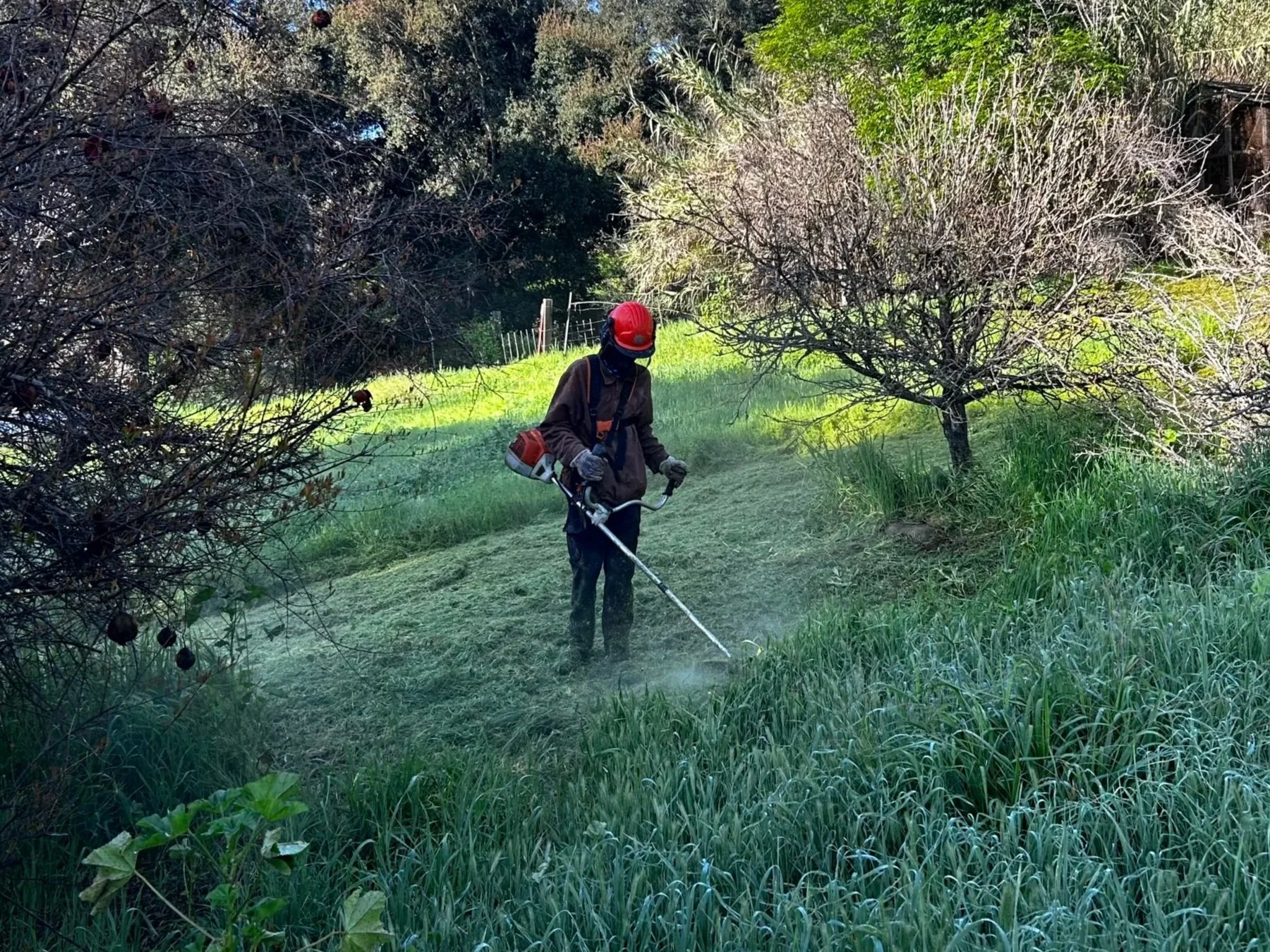
A person wearing a red helmet and a brown jacket is using a string trimmer to cut grass in a green, wooded area with trees and bushes.
Meet the Board

05 OUR APPROACH

A path through C.R.E.W. can run from a class trip to Matilija Dam to a wildland firefighting job with the U.S. Forest Service.

Once Upon a WatershedTransitional kindergarten to 7th grade
It starts in school. Students study the watershed where they live, in class and on field trips to Matilija Dam and the Ventura River estuary, and fourth graders plant acorns and oaks at nature preserves near their schools.
Green Valley ProjectAges 13 to 20
At 13, a student can join a Youth Council, where members do the research and the fieldwork on the season’s project. On April 14, 2026, the Ojai Youth Council took its heat island map to the Ojai City Council.
Field CorpsAges 14 to 25
At 14, a young person can apply to the Field Corps, where training is paid from the first day. Crews cut fuel breaks above the valley, clear defensible space around homes, and rebuild backcountry trails with a supervisor who knows the ground.
AlumniAfter C.R.E.W.
Since 1999, more than 2,000 young people have trained in paid conservation work here, and alumni have gone on to wildland fire and conservation careers. Alex Vaca, an alumnus of the Green Valley Project and the Field Corps: “All of the chainsaw experience I gained at the C.R.E.W. is super valuable to me, because I ended up going to the Forest Service as a Wildland Firefighter after.”

06 THE IMPACT
People planting or working on a hillside outdoors, with mountains and blue sky in the background.

Photo by C.R.E.W., 2018

A 16-year-old gets paid to cut a fuel break above the valley they live in.

Then progresses on to a career in conservation.

35 years of young people doing that grows resilience.