
Conservation Project
Archive
A working record of C.R.E.W. conservation projects since 1991, from the Los Padres National Forest to Santa Rosa Island.
THE ARCHIVE
Field Corps crews cut fuel breaks, restore burned trail, and clear Arundo and Tree-of-Heaven from steelhead creeks.
The Green Valley Project Youth Councils in Ojai, Oxnard, and Thousand Oaks plant oaks and school gardens, monitor wildlife, and map urban heat.
Once Upon a Watershed classes plant acorns and native plants along the Ventura River, restore wetland at the Ojai Meadows and West Campus preserves, and pull trash and test the water at the river’s estuary.
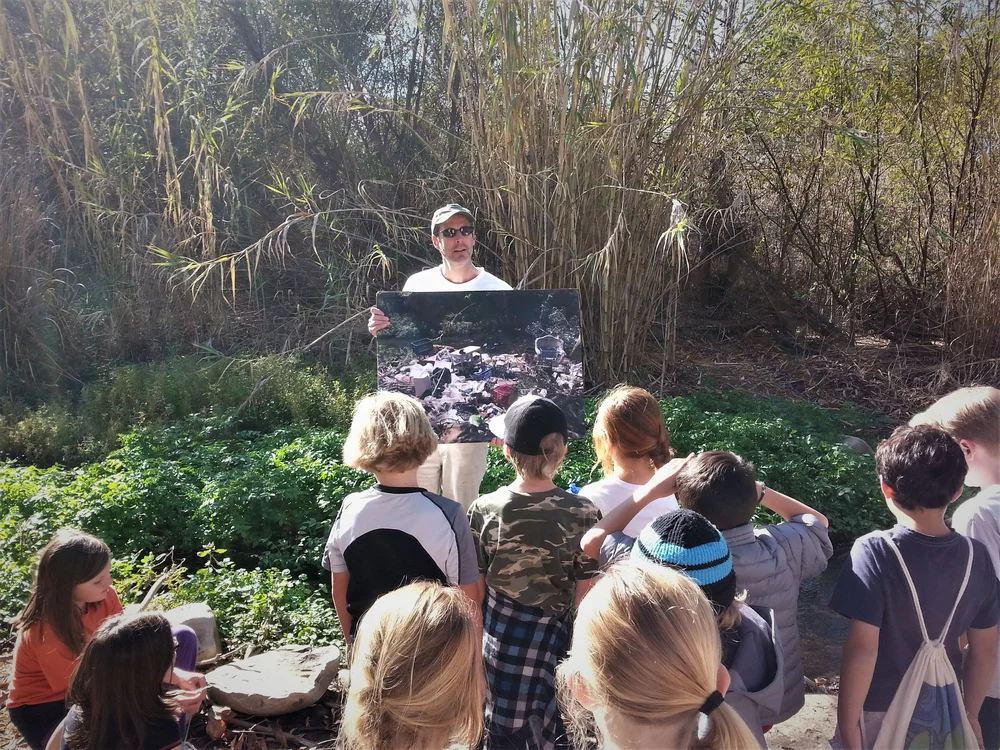
Willoughby and Big Rock Plantings on the Lower Ventura River
Fourth graders from Ventura and Rio schools plant acorns and other native plants in the Ventura River bottom at two Ventura Land Trust properties: Willoughby, between the Main Street and Highway 101 bridges, and Big Rock, just downstream of the Foster Park bridge. The plantings go into ground cleared of Arundo donax, the giant reed.
The land trust, as the Ventura Hillsides Conservancy, was a partner in the program's 2013 California State Coastal Conservancy grant. Its own $19,600 Coastal Conservancy grant of 2019 paid for volunteer Arundo clearing at the Willoughby Preserve and the estuary.
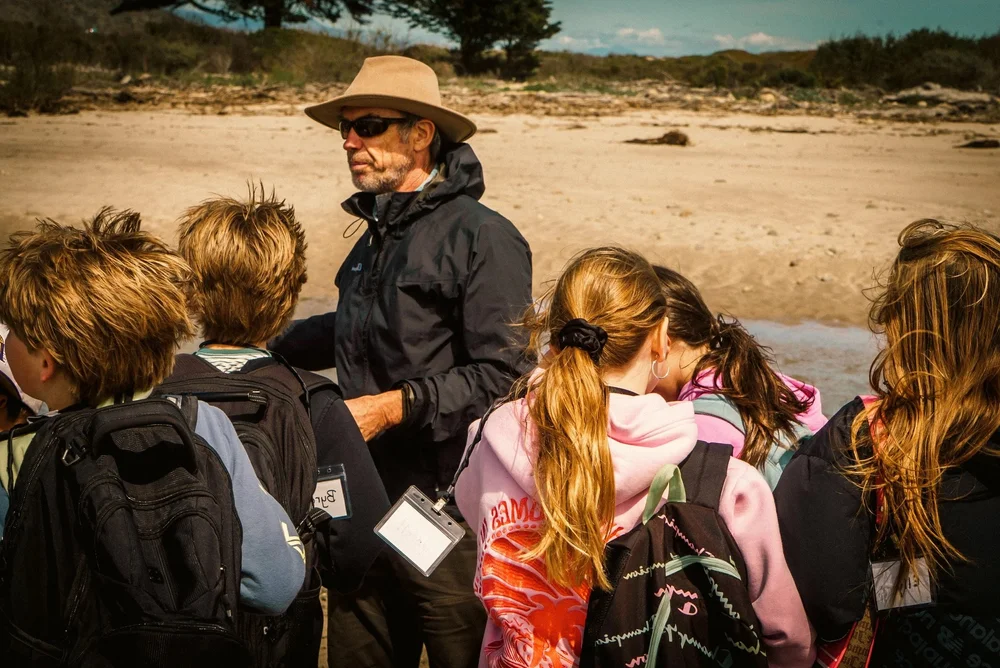
Ventura River Estuary Cleanups and Water Testing
By spring 2011, Once Upon a Watershed classes were pulling trash from the Ventura River estuary at the river mouth in Ventura; one group spent half an hour digging out a tire and a tent. The estuary and the beach were one of three sites in the program's 2013 California State Coastal Conservancy grant, with the Surfrider Foundation as a partner.
Fifth graders still collect and remove pollutant waste there, including microplastics, and test the water for turbidity, pH, and temperature to judge the river's health for the endangered southern California steelhead.
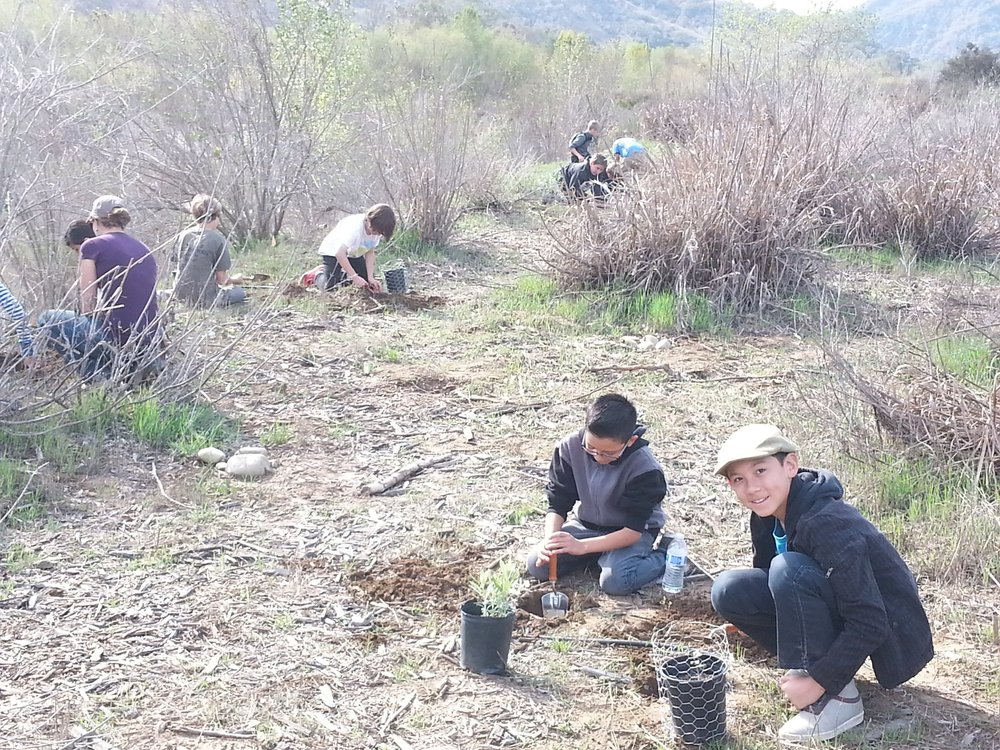
Riverbank Planting at the Ventura River Steelhead Preserve
By fall 2013, sixth graders in Once Upon a Watershed were planting native species along the Ventura River bank at the Ojai Valley Land Conservancy's 65-acre Steelhead Preserve, between Ojai and Ventura, under conservation biologists from the conservancy and the California Conservation Corps. The preserve protects habitat for the endangered southern California steelhead.
The plantings were one of three sites in a $29,550 California State Coastal Conservancy grant to the program in June 2013, which took more than 600 fourth through sixth graders from ten schools along the river into the field.
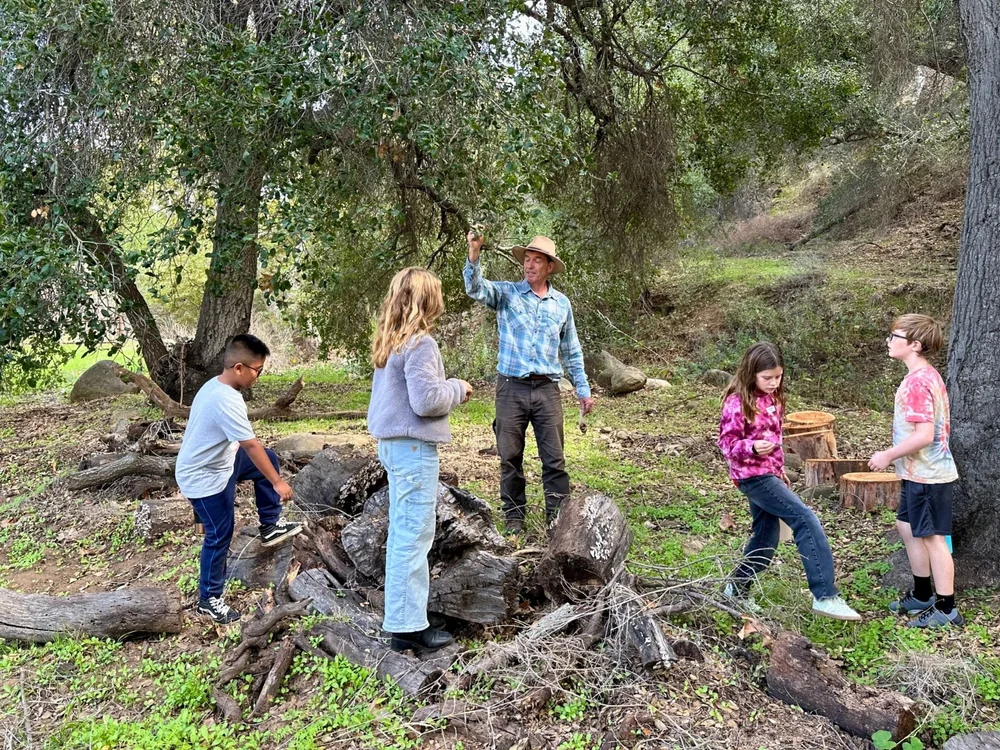
West Campus Preserve Wetland Restoration
In fall 2025, Once Upon a Watershed began bringing school classes to the West Campus Preserve, on HELP of Ojai's West Campus at 370 Baldwin Road. The project takes weeds and trash off 4.98 acres, plants locally sourced native plants, and extends the riparian corridor along 426 feet of West Campus Creek. Sunset School fourth graders planted the first acorns on November 5, 2025.
The California Department of Fish and Wildlife permitted the creek work to benefit three protected species: Crotch's bumble bee, southern California steelhead, and the California red-legged frog. A $98,016 grant from the California State Coastal Conservancy, awarded in 2024 through the Southern California Wetlands Recovery Project, pays for the work. Oaktober 2026's community oak planting was held on this ground on October 24.
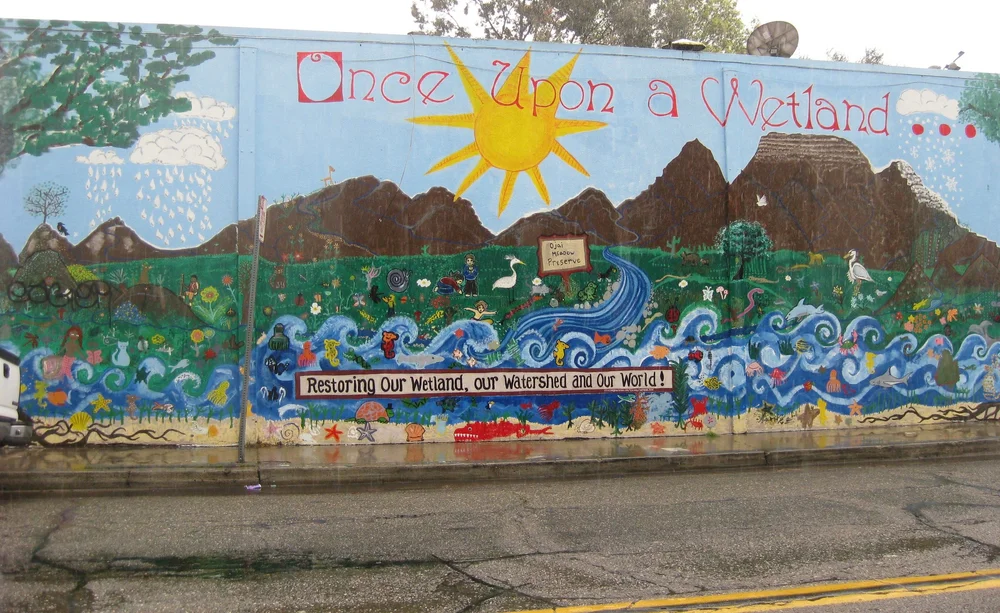
Once Upon a Wetland at the Ojai Meadows Preserve
In 2005, students from Oak Grove School, Meiners Oaks Elementary School, and Nordhoff High School began restoring the wetland at the Ojai Meadows Preserve, the Ojai Valley Land Conservancy's 58-acre preserve in Ojai. The work ran as Once Upon a Wetland, the project that became Once Upon a Watershed.
Fourth graders still collect acorns and plant them on the preserve, toward the conservancy's oak woodland restoration there.
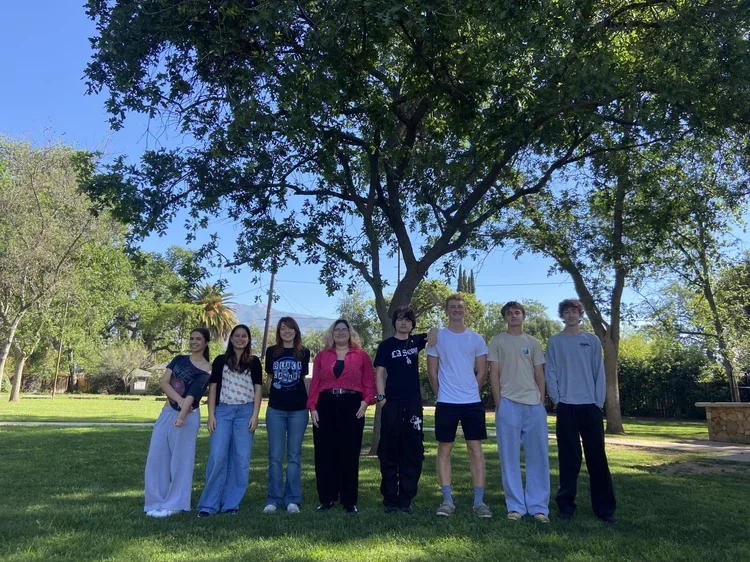
Ojai Urban Heat Mapping
In spring 2026, the Ojai Youth Council researched ways to reduce urban heat in their community through strategic tree planting. Using QGIS mapping software, participants identified urban heat island hotspots, visited each site to evaluate planting locations, and developed recommendations for increasing Ojai's tree canopy.
The project ended with presentations to Ojai Trees and the Ojai City Council and a plan to plant 66 trees at priority sites. Planting started in fall 2026 at four of them: Descanso Avenue, Daly Ranch Park, Sunset Place, and Community Memorial Hospital.
Ojai Trees donated the first 12 trees. The planting days were October 18 and October 25, with the last on November 1, and C.R.E.W. will water and establish the trees for their first three years.
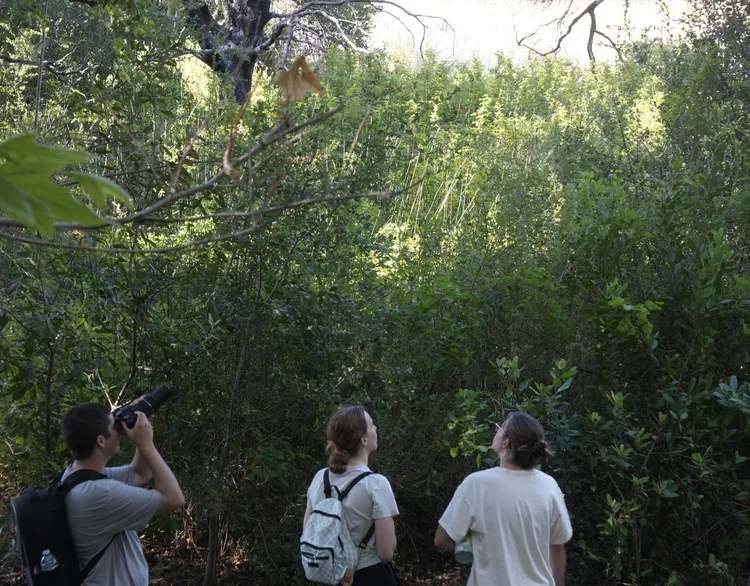
Creating a Community Bird Guide
In spring 2026, the Thousand Oaks Youth Council spent 12 weeks on the trails of the Conejo Valley learning to identify native birds by sight and song.
Participants practiced bird conservation techniques through point counts, used field guides and the Merlin Bird ID app to identify species, and compared observations from natural, urban, and suburban habitats. Their work produced an educational bird identification brochure for the community.
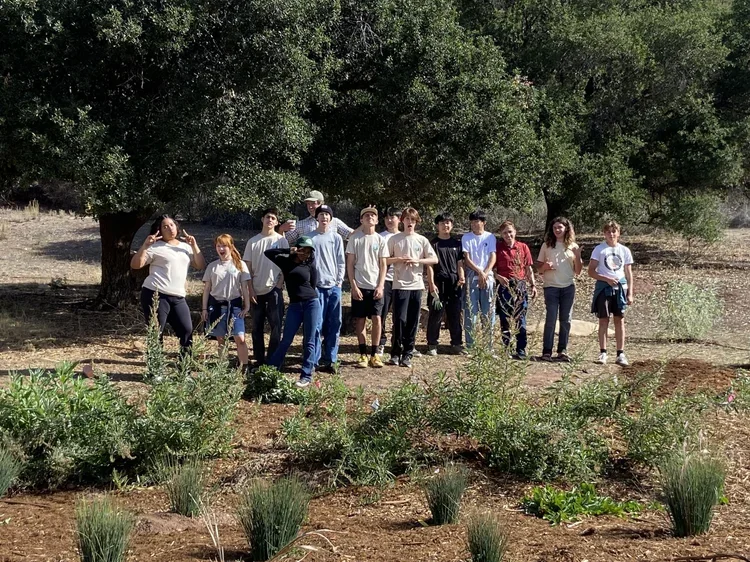
Ojai Valley School Garden Phase Two
The Ojai Youth Council led community events to complete the native garden at Ojai Valley School, planting 185 native plants and creating a rain garden. The rain garden manages stormwater by capturing runoff, reducing erosion, and preventing pollutants from reaching nearby creeks and rivers.
The project added irrigation, mulch, and educational signage, finishing the site as an outdoor classroom.
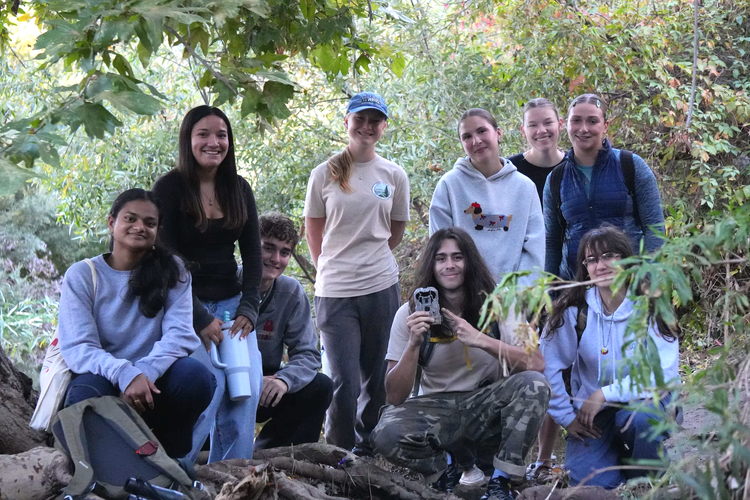
Wildlife Monitoring in Conejo Open Space
Thousand Oaks Youth Council participants spent afternoons on Conejo Valley trails in the name of wildlife conservation. Working with the Conejo Open Space Conservation Agency, members learned to set up the camera traps used by professional biologists around the globe, then evaluated the collected image data and compiled it into a research poster presented to COSCA partners.
Art-focused participants created a mixed media piece depicting a human shoe print with an animal paw print inside it.
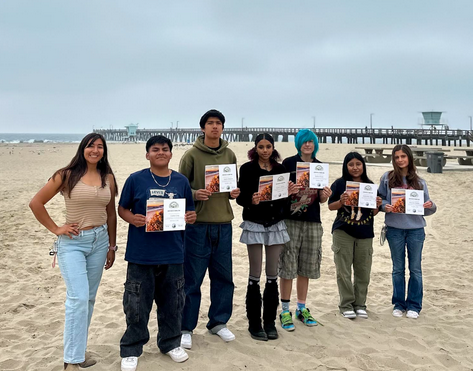
Wrack Monitoring and Shorebird Conservation
The Oxnard Youth Council studied wrack at Ormond Beach, which supports the invertebrates that feed shorebirds including the threatened western snowy plover. Over four weeks they measured wrack height, width, and invertebrate abundance, and observed a decrease in wrack that could reduce available food for birds.
Ormond Beach's intact dune-to-wetland ecosystem supports over 200 migratory bird species.
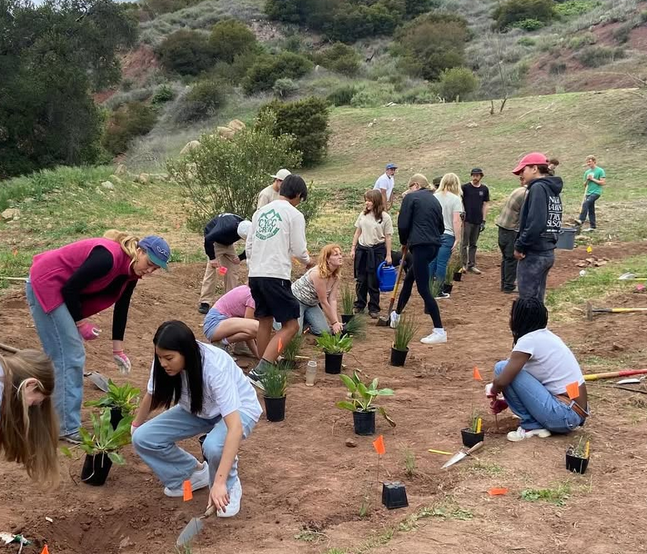
Ojai Valley School Garden
The Ojai Youth Council designed and began installing a native plant garden at Ojai Valley School, planting 130 native plants and starting a rain garden with guidance from Watershed Progressive. Summer mulching, irrigation, and fall community planting days followed to support the garden's long-term success.
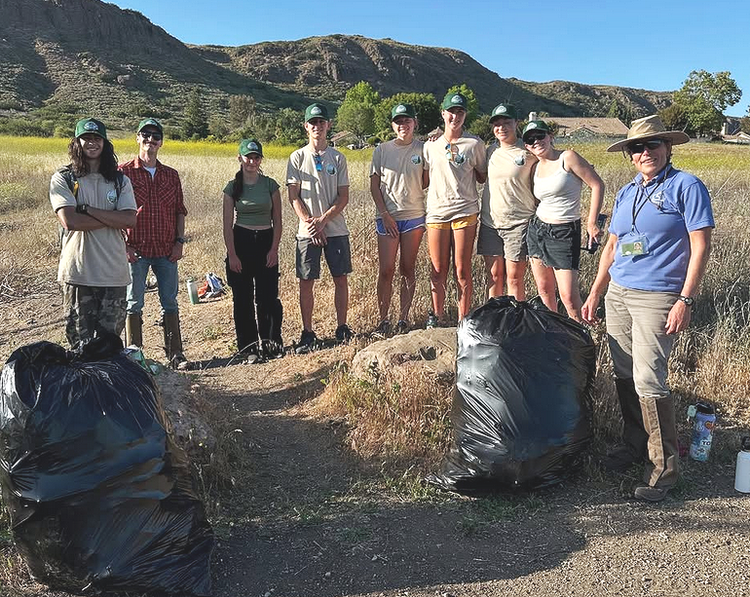
Wings Over Wetlands: Bat Habitat Restoration
The Thousand Oaks Youth Council supported a restoration project at Wildwood Regional Park, learning about seasonal wetlands and removing invasive species with guidance from the Conejo Open Space Conservation Agency's Anna Huber. Their work created space for native plants and wildlife to thrive.
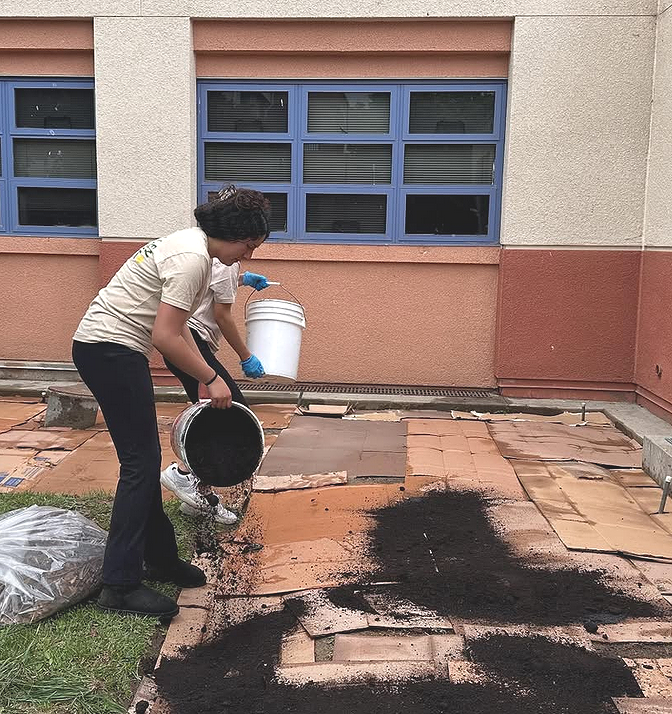
Sheet Mulching at Oxnard High School
The Oxnard Youth Council completed a sheet mulching project at Oxnard High School, transforming the ground with cardboard, compost, and mulch to build healthy soil for a future native plant garden. The work was carried out despite busy end-of-year schedules, supported by teachers and school staff.
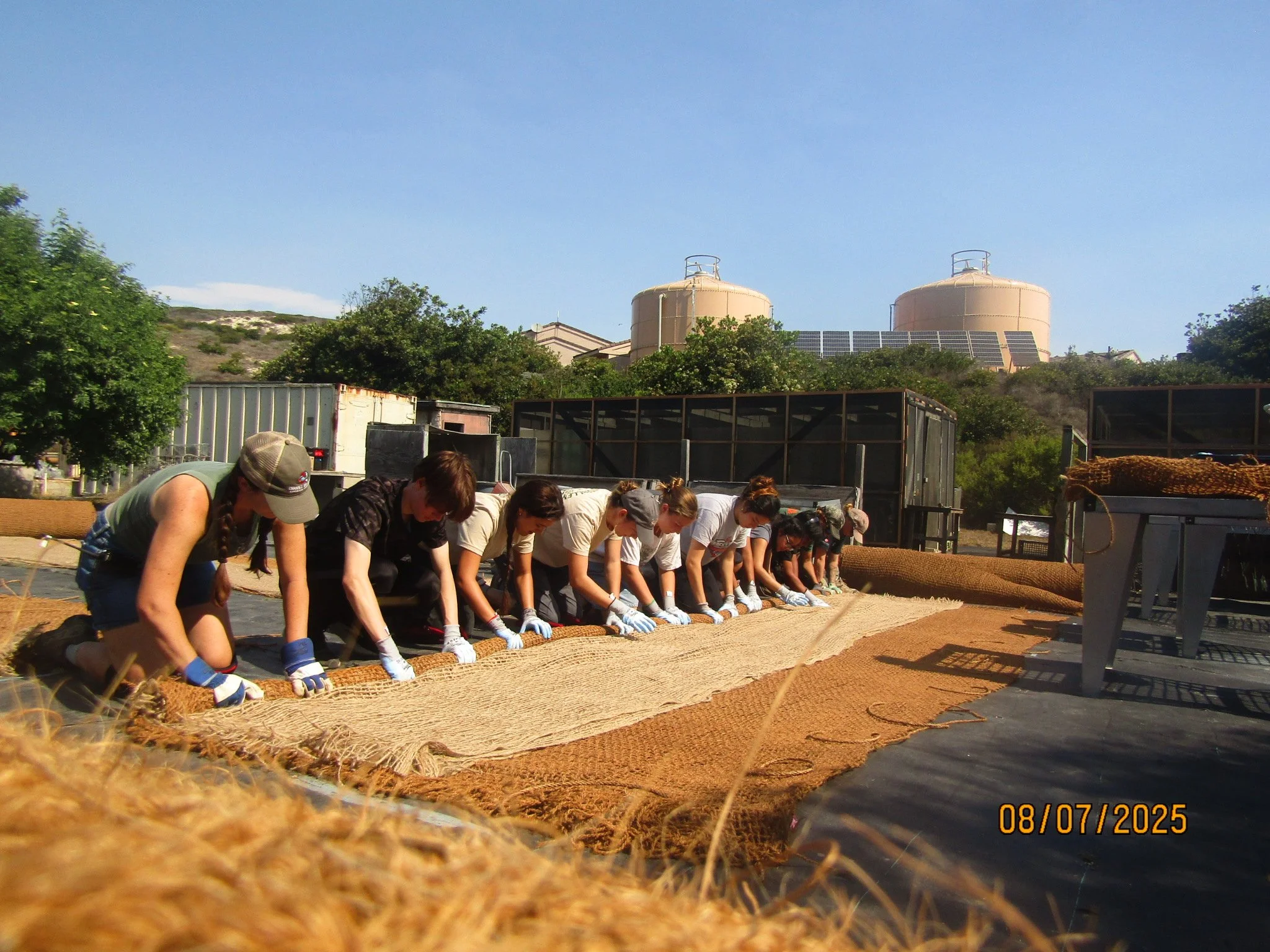
Santa Rosa Island Cloud Forest
C.R.E.W. crew staff and a couple of Green Valley Project Youth Council members made one trip to Santa Rosa Island and built 20 wattles for the Cloud Forest Restoration Project.
Wattles are erosion-control structures that slow runoff, capture sediment, and stabilize soil, creating conditions for island oak seedlings to return to slopes stripped by 150 years of ranching. The long-term restoration is led by Channel Islands National Park and the U.S. Geological Survey.
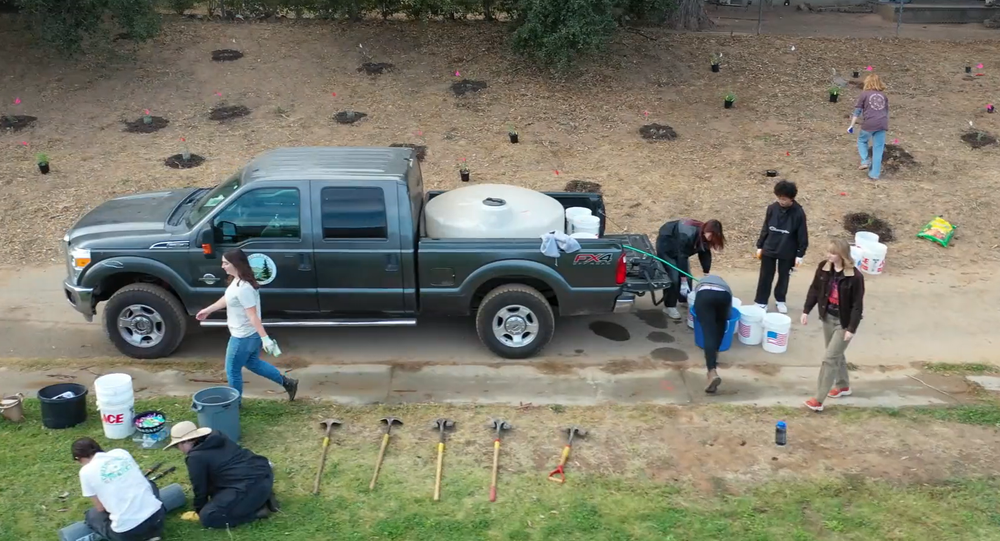
Nordhoff Pollinator Pathway Installation
In fall 2024, the Ojai Youth Council worked with students, volunteers, and community partners to install their largest native plant garden to date at Nordhoff High School, planting 273 pollinator-friendly native plants across the hillside.
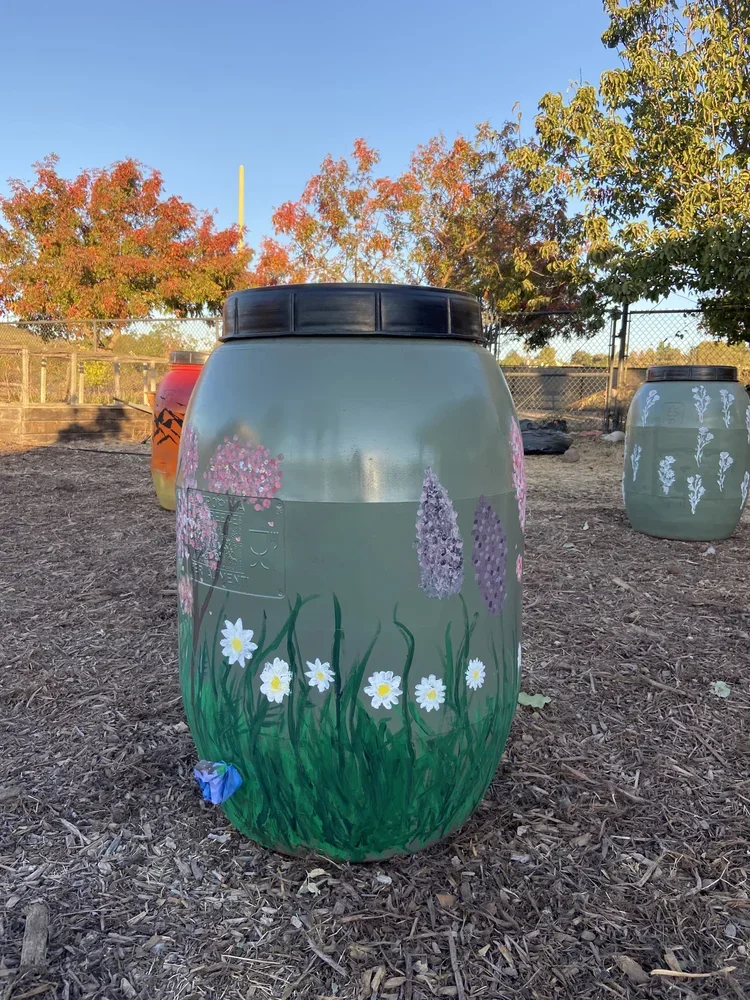
Rain Garden Barrel Design
In Fall 2024, the Thousand Oaks Youth Council partnered with Rain Barrel International to design and paint seven rain barrels. Five were sold and two donated to school gardens. Together they conserve up to 9,100 gallons of water annually.
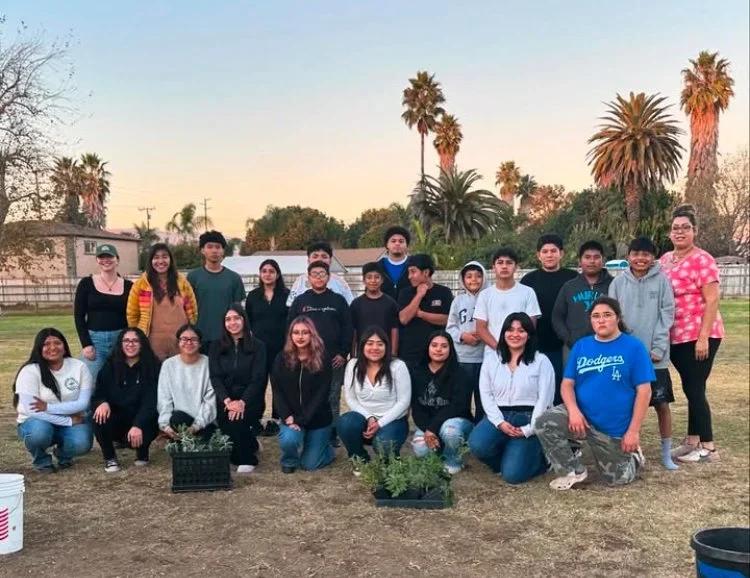
El Rio Boys and Girls Club Garden
In Fall 2024, the Oxnard Youth Council designed and installed a 65-plant native garden at the Nyeland Acres Boys and Girls Club, engaging local youth, advocating to save sycamore trees, and committing to care for the new habitat in the years ahead.
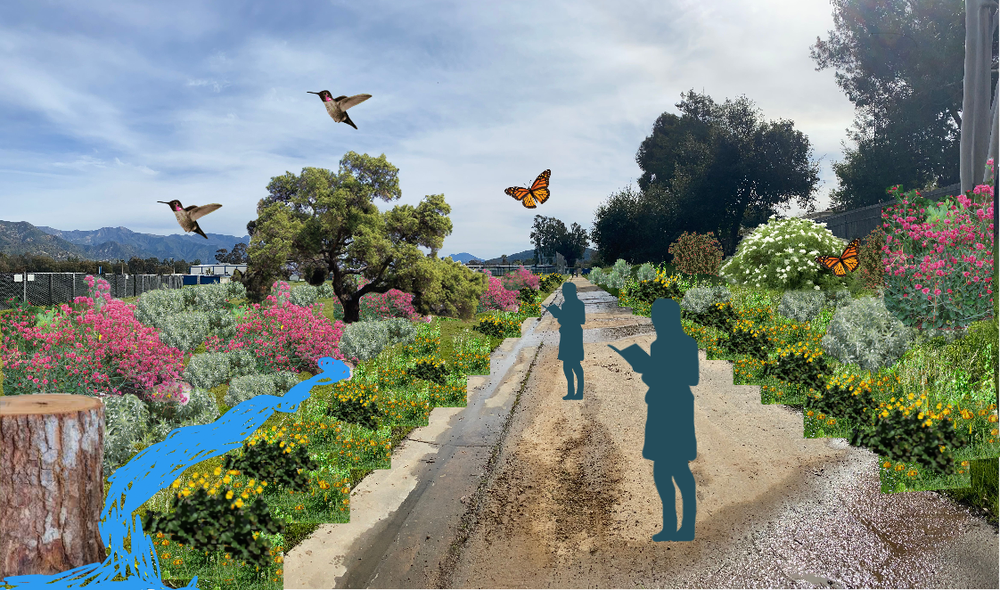
Nordhoff Pollinator Pathway
In Spring 2024, the Ojai Youth Council designed pollinator and rain gardens for Nordhoff High School to address sustainability, biodiversity, and campus beautification, working with school staff on plans that were brought to life through community planting events in Fall 2024.
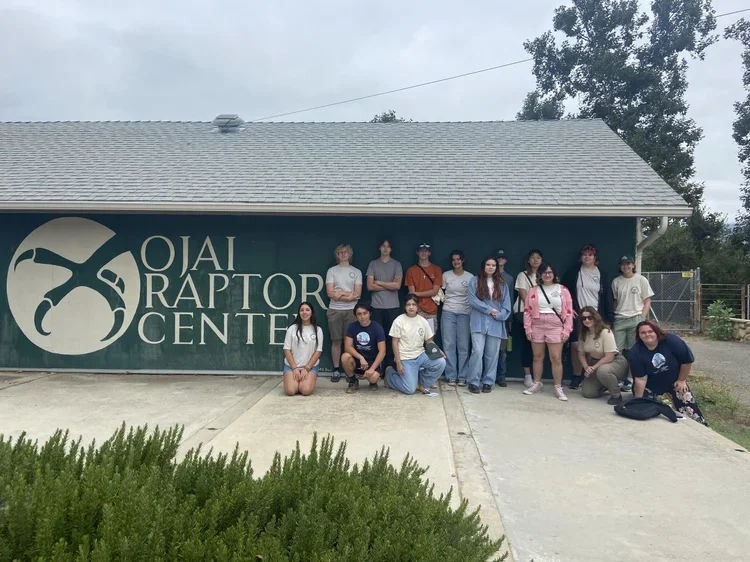
Save Our Amazing Raptors
In Fall 2023, the Ojai Youth Council partnered with local organizations to install owl boxes and a raptor perch at Nordhoff High School, release rehabilitated barn owls, raise awareness about rodenticides, gather 60 resident pledges, and plant over 800 native plants and trees in the Ojai Valley.
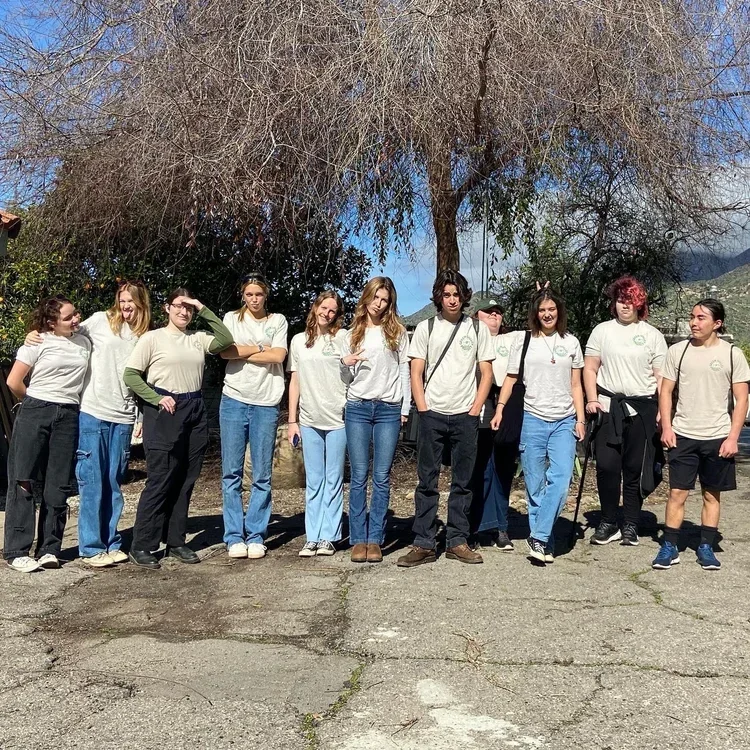
MESA Garden Project
In Spring 2023, the Ojai Youth Council created a demonstration garden at MESA that serves as both a critter corridor and a sensory space, planting 250 native species with volunteer support and installing drip irrigation to support the garden's long-term success.
Invasive Initiative
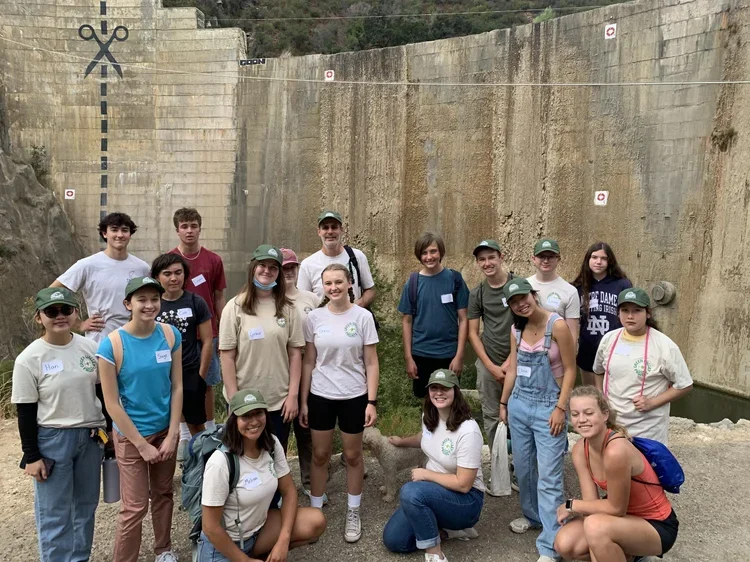
In Fall 2022, the Ojai Youth Council partnered with UC professors and the Ventura Land Trust to remove over 55 pounds of invasive smilo grass from Big Rock Preserve, helping restore biodiversity to the landscape.
Save the Pollinators
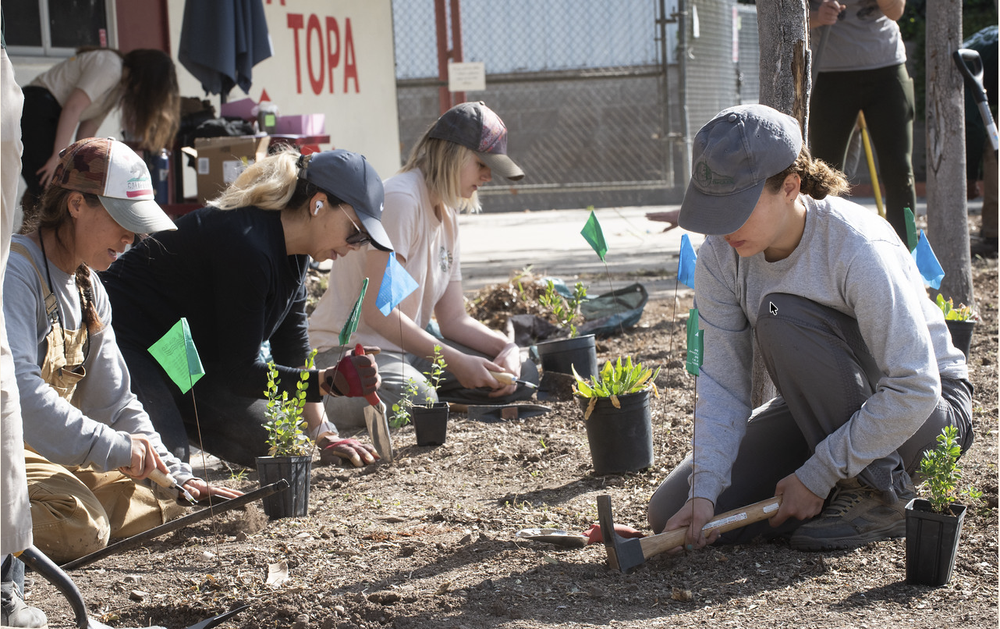
In Spring 2022, the Ojai Youth Council partnered with Watershed Progressive to build the Green Valley Project Pollinator Corridor. A pollinator corridor is a network of native gardens that gives pollinators shade, food, and shelter as they migrate through Ventura County.
The Youth Council planted four community gardens: Topa Topa Elementary, the Topa Topa Head Start preschool, Mama Walnut Farm in upper Ojai, and the Humane Society of Ventura County. Another 50 gardens went in at homes, 653 California native plants in all.
The Head Start garden began as a Youth Council member's AP Environmental Science class project. The Mama Walnut Farm garden has a demonstration bioswale that slows, spreads, and sinks runoff from the barn roof.
Ojai Meadows Preserve Oak Restoration
At the Ojai Meadows Preserve, a site managed by the Ojai Valley Land Conservancy, Green Valley Project crews have planted native valley oaks and pollinator-habitat species as part of a multi-year restoration. The work reintroduces a keystone species that historically defined the Ojai Valley floor.
The effort launched in 2020 as the Green Valley Project's first restoration project, with 36 oak circles installed at the outset, each holding several oak seedlings ringed by native shrubs.
Re-Oaking Ojai
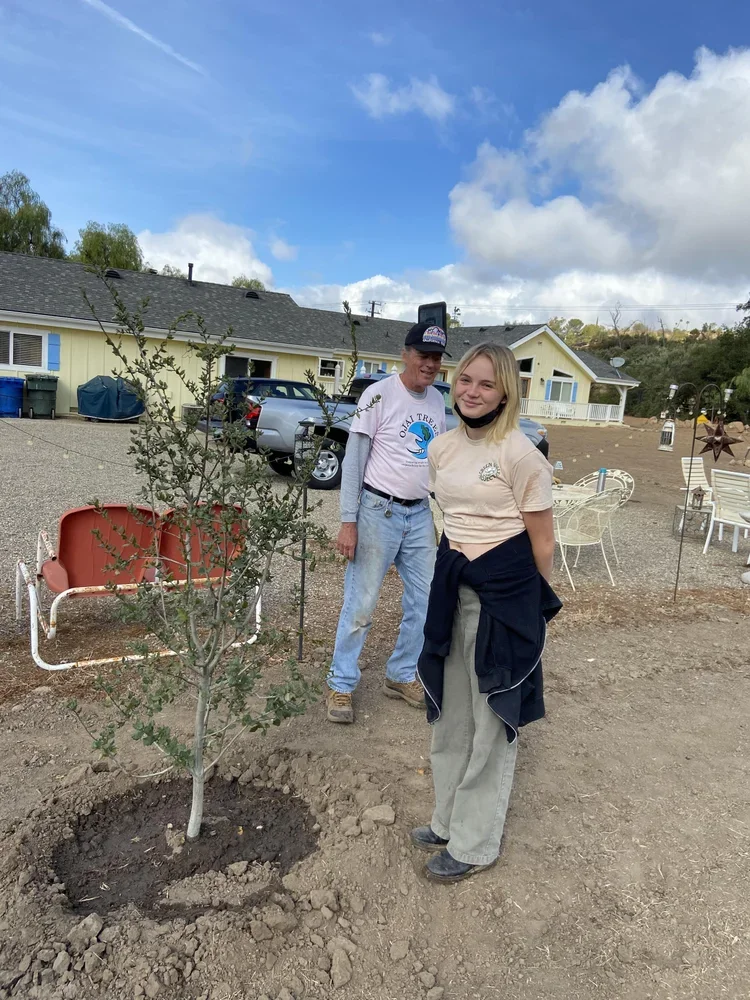
In Fall 2021, the first Ojai Youth Council partnered with Ojai Trees to plant 50 native oak trees in the Ojai Valley, enhancing watershed health, reducing erosion and temperatures, and providing habitat for birds and pollinators.
ReLeaf Tree Planting
In 2021, C.R.E.W. joined the Center for Regenerative Agriculture, Ojai Trees, and Ventura Land Trust on a California ReLeaf grant to plant more than 300 trees across Ventura County. Native oaks went in on three Ventura Land Trust properties; food and shade trees were installed on Ventura's westside.
The project is in its multi-year monitoring and maintenance phase, with crew staff trained annually by a certified arborist.
Middle Stewart Canyon Creek Restoration
Middle Stewart Canyon Creek is one of only eight stream reaches in the City of Ojai identified as potentially suitable habitat for federally endangered southern California steelhead.
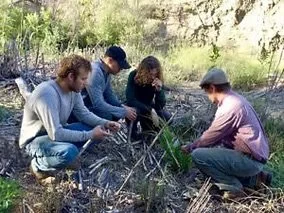
Across a 10.8-acre riparian corridor, Field Corps crews have removed invasive non-native species (most notably Tree-of-Heaven) and reintroduced native plants through active and passive restoration. Funding comes from the California Department of Fish and Wildlife's Proposition 1 Watershed Grant Program.
San Antonio Creek Restoration at Camp Comfort
In fall 2018 and winter 2019, C.R.E.W. cleared invasive plants from 2.4 acres along 0.4 stream miles of San Antonio Creek at Camp Comfort, then revegetated the reach with natives in winter and spring 2019.
C.R.E.W. was the grantee under the State Coastal Conservancy's Community Wetland Restoration Grant Program, with a $27,600 grant against a $48,795 total project cost. The Southern California Wetlands Recovery Project lists the project as completed.
Thomas Fire Trail Restoration
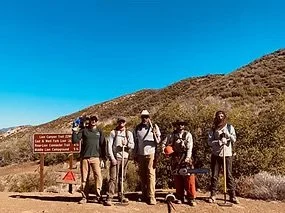
The December 2017 Thomas Fire burned across the Ojai and Santa Barbara ranger districts of the Los Padres National Forest, damaging trail and leaving slopes vulnerable to winter erosion.
Within weeks, C.R.E.W. was on the ground with the Los Padres Forest Association and the U.S. Forest Service, shoring up burned tread before the rains came. The partnership continues through multiple project cycles, most recently the Murietta Trail connecting the Ojai backcountry to Santa Barbara County.
Lower San Antonio Creek Arundo Removal
By 2014, C.R.E.W. and the County of Ventura were removing Arundo donax (giant reed) and restoring riparian habitat along lower San Antonio Creek, a Ventura River tributary designated as critical habitat for southern California steelhead. Removing Arundo opens the stream channel for native vegetation, restores hydrologic function, and reduces wildfire fuel along the corridor.
Lower San Antonio Creek sits downstream of Stewart Canyon Creek and the West Barranca, where C.R.E.W. has also worked, and Arundo seed and rhizome washing down from those reaches was the standing threat to restored ground below.
Arundo eradication on San Antonio Creek continues as a watershed-scale effort led by the Ojai Valley Land Conservancy, with treatments funded through 2029.
The C.R.E.W. Trail at Foster Park
In 2000, C.R.E.W. restored one of Foster Park's 1930s trails, stripping roughly 70 years of undergrowth, poison oak and deadwood and rebuilding the tread down to stretches of the original rock trail wall. Tying that route into the existing Red Mountain Fire Break Road produced a three-mile loop, which opened to the public on March 1, 2000.
More than 18 Ojai-area youth and four supervisors built it across about three months, working weekends, after school and through breaks. The trail still carries C.R.E.W.'s name in local use.
27-Mile Fuel Break Network
In 2001, C.R.E.W. received a $161,000 National Fire Plan grant from the U.S. Forest Service to cut roughly 25 miles of fuel break through the foothills of Ojai over 18 months, matched by $49,000 in C.R.E.W. cost share and staffed by as many as 45 young people.
Reporting from the field that November put the network at 27 miles, with crews clearing manzanita, sumac and ceanothus from the hills off Foothill Road and stacking the brush for chipping and reuse as mulch. The project scaled an established Forest Service working relationship up to large-scale wildfire mitigation.